
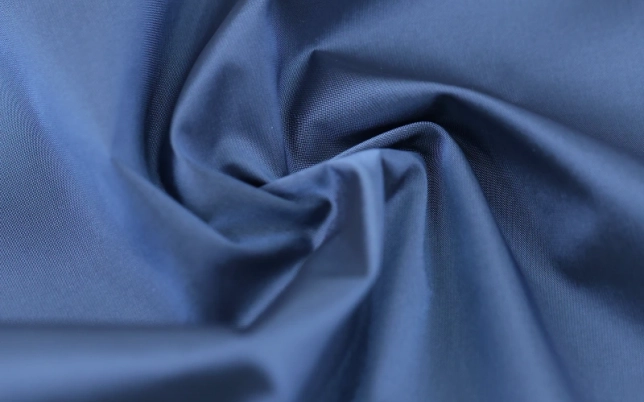
A question I hear surprisingly often is:
“We received three quotations for what appears to be the same fabric. Why is one supplier 30% cheaper than the others?”
It’s a fair question.
On paper, the specifications may look almost identical.
- 100% Polyester
- Plain Weave
- 150 GSM
- DWR Finish
- 150 cm Width
So why the difference?
Because a fabric specification tells you what the fabric is supposed to be.
It doesn’t tell you how it was made.
And that’s often where the real difference lies.
The Specification Is Only the Starting Point
Two suppliers can quote the same construction, the same composition, and even the same weight.
That doesn’t mean they’re producing the same fabric.
Price is influenced by dozens of decisions made before the fabric ever reaches the inspection table.
Some are obvious.
Many are not.
Five Things a Fabric Quotation Doesn’t Show
1. The Quality of the Raw Material
Not all yarn is created equal.
Different spinning mills, fiber grades, and raw material consistency all affect how a woven fabric performs in dyeing, weaving, and garment production.
Two fabrics may look similar on the first day.
Their performance after repeated washing or long production runs may tell a different story.
2. Weight and Width Tolerance
A quotation might state:
150 GSM | 150 cm
But it rarely tells you the acceptable production tolerance.
Is the supplier controlling weight within a tight range?
Can the finished width remain consistent across every roll?
Small variations can affect marker efficiency, fabric consumption, and garment consistency during bulk production.
3. The Finishing Process
Functional finishes often look similar when the sample is new.
The difference appears after use.
Will the water-repellent finish maintain its performance after multiple washes?
Will the hand feel remain consistent from bulk to bulk?
Has the finishing process been optimized for long-term performance—or simply for passing the initial sample approval?
These are questions worth asking.
4. Quality Control Standards
Inspection standards vary more than many buyers realize.
Some mills inspect every roll using an agreed grading system.
Others rely primarily on internal quality benchmarks.
Neither approach is automatically right or wrong.
What’s important is understanding which standard is being applied to your order.
Consistency is difficult to achieve without a consistent inspection process.
5. The Supplier’s Operating Model
A quotation reflects more than material costs.
It also reflects how the supplier operates.
Do they maintain stable production planning?
Can they communicate potential delays early?
Do they keep development records for repeat orders?
Can they reproduce the same fabric six months later?
These capabilities may not appear on a quotation, but they often influence the total cost of ownership.
The Lowest Price Doesn’t Always Mean the Lowest Cost
Most buyers compare the price per meter.
Experienced sourcing teams often look further.
They also consider:
- The likelihood of repeat sampling.
- Production consistency.
- Delivery reliability.
- Technical support.
- Communication during development.
- The ability to reproduce approved bulk quality.
These factors rarely appear in a spreadsheet.
But they often determine whether a project stays on schedule.
What We Focus On
At YL Textile, we understand that buyers are not simply purchasing fabric.
They’re managing production schedules, quality expectations, and customer commitments.
That’s why we focus on more than the quotation itself.
We work to provide:
- Clear technical communication before production.
- Consistent bulk quality from order to order.
- Transparent production updates.
- Stable lead times.
- Practical support throughout fabric development.
Because choosing a fabric supplier isn’t only about comparing today’s price.
It’s about reducing tomorrow’s uncertainty.
One Question Worth Asking
The next time you compare two quotations, don’t just ask:
“Why is this supplier cheaper?”
Also ask:
“What am I not seeing?”
Sometimes the biggest differences between two suppliers never appear on the quotation.
They appear later—in the cutting room, on the production line, or after the garments reach your customer.
And by then, the decision has already been made.
FAQ
Q1: Why can the same fabric specification have different prices?
Because factors such as yarn quality, production consistency, finishing processes, inspection standards, and supplier capabilities all influence the final cost—even when the specifications appear identical.
Q2: What should buyers compare besides price?
Evaluate quality consistency, lead-time reliability, inspection standards, communication, repeatability, and technical support throughout the development and bulk production process.
Q3: How do weight and width tolerances affect garment manufacturing?
Variations in GSM and finished width can influence marker efficiency, fabric consumption, garment consistency, and production yield during cutting.
Q4: Why is quality control important in fabric sourcing?
A structured inspection process helps ensure that bulk production matches approved standards, reducing the risk of defects, rework, and production delays.
Q5: How can apparel brands reduce sourcing risk?
Work with suppliers who provide transparent communication, consistent quality control, stable production planning, and clear documentation from development through bulk production.
Learn more
Connect with me on LinkedIn
https://www.linkedin.com/in/ylfabric
#FabricSourcing
#TextileManufacturing
#ApparelManufacturing
#Procurement
#TextileSupplyChain