When evaluating material options, selecting the right outerwear fabric GSM and structural density is one of the most critical decisions for garment buyers. Sourcing managers often focus first on fiber composition or surface appearance. However, two underlying structural factors determine final product performance and manufacturing cost: outerwear fabric GSM and weave density.
For sourcing teams, GSM (grams per square meter) and thread density directly influence:
- Garment weight and portability
- Down-proof performance
- Fabric hand feel and touch
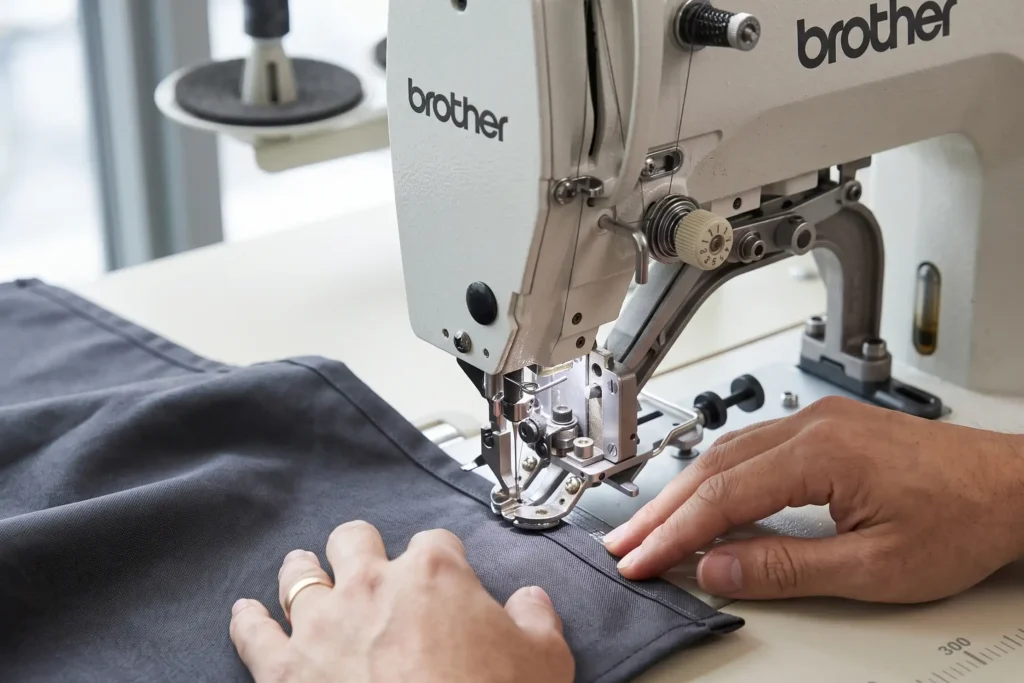
- Sewing behavior on the line
- Raw material consumption
- Final production cost
[Image: Textile quality control technician measuring outerwear fabric GSM and thread density]
A lightweight down jacket requires a shell fabric light enough for wearing comfort. However, that same fabric must remain dense enough to prevent feather leakage. In contrast, a heavy-duty workwear jacket needs a higher outerwear fabric GSM with stronger abrasion resistance.
Therefore, the main challenge for buyers is balancing outerwear fabric GSM, structural density, and manufacturing cost.
Understanding Outerwear Fabric GSM in Jacket Sourcing
The term GSM means grams per square meter. It represents the actual physical weight of a fabric over a specific surface area.
In jacket development, evaluating outerwear fabric GSM helps buyers estimate how a material will influence:
- Final garment weight
- Fabric consumption
- International shipping cost
- Wearing comfort
- Commercial product positioning
For example, two nylon shell fabrics may both use 100% nylon. However, they can have completely different GSM values:
- 20D Nylon Shell: 35 GSM
- 20D Nylon Shell: 50 GSM
Although the fiber composition is identical, the final garment performance will be completely different.
Specifically, a higher outerwear fabric GSM usually indicates more yarn usage or a tighter weave construction. As a result, this tighter construction improves durability and coverage. However, it also increases raw material usage and total garment weight.
Therefore, sourcing teams should always evaluate outerwear fabric GSM based on the end product application rather than viewing it as a simple quality indicator.
How Outerwear Fabric GSM Affects Garment Performance
Different garment categories require completely different outerwear fabric GSM ranges.
Lightweight Shell Fabrics
Lower GSM fabrics are commonly used for ultralight down jackets, packable outdoor jackets, and travel apparel.
Key advantages include:
- Reduced garment weight
- Better packability
- Comfortable wearing experience
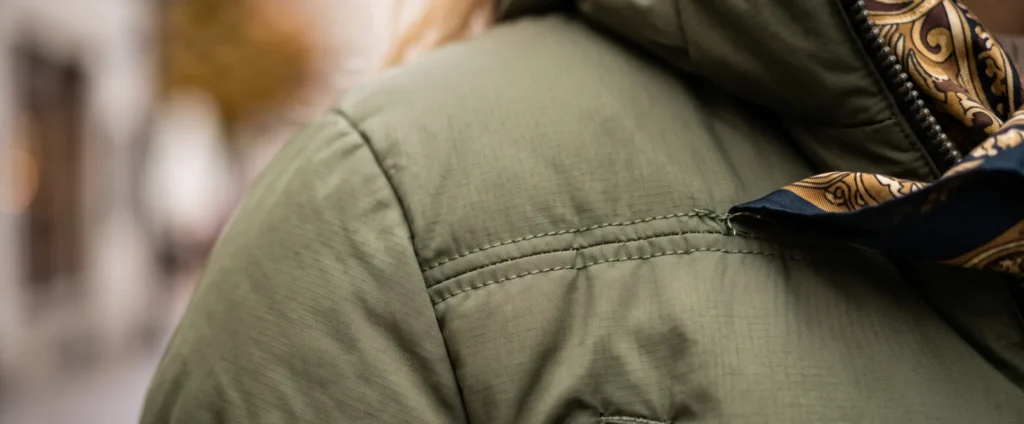
However, choosing a very low outerwear fabric GSM may create specific manufacturing challenges. For instance, lighter fabrics often show lower abrasion resistance. In addition, they require a delicate sewing process, increasing the risk of fabric damage during production.
For premium lightweight outerwear, the goal is not simply reducing GSM. Instead, the fabric must maintain enough strength and dimensional stability for daily use.
Medium Weight Outerwear Fabrics
Medium GSM fabrics are widely used for down jackets, softshell coats, and outdoor lifestyle apparel.
Consequently, they provide a balanced compromise between:
- Structural durability
- Consumer comfort
- Cost control
Many brands choose this category because it supports commercial production without creating excessive manufacturing difficulty.
Heavy Outerwear Fabrics
A higher outerwear fabric GSM is usually selected for workwear jackets, protective outdoor garments, and heavy-duty products.
Major advantages include:
- Superior abrasion resistance
- Stronger fabric structure
- More substantial hand feel
However, higher GSM also means increased raw material consumption, higher fabric cost per meter, and increased freight weight. For brands targeting lightweight outdoor markets, excessive GSM can negatively affect product positioning.
Outerwear Fabric GSM and Down-Proof Density
For insulated outerwear, especially down jackets, fabric density is one of the most critical factors affecting down-proof performance.
Many buyers assume that down leakage is mainly controlled by backside coatings or chemical calendering. In reality, physical fabric construction plays an equally important role alongside outerwear fabric GSM.
[Image: Close-up macro photo of high-density nylon taslon fabric showing tight warp and weft weave structure]
Down-proof performance depends on several structural factors:
- Yarn thickness (Denier)
- Weave structure
- Warp and weft thread density
- Calendering and finishing process
A tightly constructed fabric creates smaller gaps between individual yarns. As a result, it becomes much harder for feathers or down clusters to penetrate the fabric barrier.
This structural barrier is especially important for lightweight shell fabrics used in premium insulated garments. Conversely, a fabric with insufficient density may lead to:
- Feather leakage
- Poor customer experience
- Increased return risk
However, higher density is not always better. An overly tight construction may cause higher fabric cost, reduced air permeability, and more difficult sewing processing. Therefore, the correct solution is to balance density with the specific requirements of the finished garment.
How Outerwear Fabric GSM and Density Change Hand Feel
Consumers often judge outerwear quality through touch. A fabric that feels smooth, compact, soft, and clean usually creates a strong premium impression.
These sensory characteristics are influenced by:
- Yarn selection
- Fabric density
- Weave construction
- Finishing technology
For example, two 20D nylon fabrics may have the same fiber composition but completely different hand feel:
- Fabric A (Lower Density): Features a softer structure and a lighter feeling.
- Fabric B (Higher Density): Features a more compact surface, offering better protection and a more premium touch.
Neither fabric is automatically better. In short, the correct choice depends on whether the garment is designed for ultralight travel, technical outdoor performance, or everyday winter wear.
How Outerwear Fabric GSM Influences Production Cost
For sourcing managers, choosing a specific outerwear fabric GSM directly affects total manufacturing cost across three main areas.
1. Raw Material Consumption
A higher outerwear fabric GSM generally means higher yarn usage during weaving. Consequently, more material consumption increases:
- Fabric cost per meter
- Total garment material cost
However, a lower GSM fabric may require additional finishing or reinforcement solutions. These extra steps can also raise production expenses.
2. Fabric Cost Per Meter vs. Total Garment Cost
A common purchasing mistake is comparing only fabric price per meter without looking at consumption.
Consider this comparison:
- Fabric A: USD 1.20 / meter (Requires 2.0 meters per jacket = USD 2.40 total)
- Fabric B: USD 1.50 / meter (Requires 1.5 meters per jacket = USD 2.25 total)
As demonstrated above, the cheaper fabric per meter does not always yield the lower garment cost. Therefore, sourcing teams must calculate fabric consumption, cutting efficiency, waste percentage, and final garment cost together.
3. Transportation and Supply Chain Impact
Fabric weight also influences global logistics. A heavier outerwear fabric GSM increases shipment weight, ocean freight cost, and warehouse storage requirements. For brands producing large volumes, small differences in GSM create significant cost variations across thousands of garments.
Common Mistakes When Evaluating Outerwear Fabric GSM
Mistake 1: Choosing the Lowest GSM to Reduce Cost
Reducing fabric weight may lower material cost initially. However, it often creates downstream problems:
- Lower abrasion resistance
- Poor hand feel
- Increased production sensitivity
In short, a low-cost fabric may create higher expenses later through quality returns.
Mistake 2: Increasing Density Without Considering Production
Higher density improves down-proof performance. Nevertheless, excessive density creates manufacturing bottlenecks:
- Difficult cutting operations
- Needle heat problems
- Slower sewing speeds
Fabric performance must always match factory production capabilities.
Mistake 3: Comparing Fabric Prices Without Looking at End Use
A fabric designed for an ultralight down jacket should not be compared directly with a heavy-duty workwear material.
Instead, sourcing managers should evaluate:
- Product purpose
- Target customer
- Expected lifespan
- Manufacturing requirements
Working with experienced suppliers helps brands select suitable materials through professional custom fabric solutions instead of simply comparing price per meter.
Q&A: Common Questions About Outerwear Fabric Selection
Q: Does higher outerwear fabric GSM always mean better quality? Answer: No. Higher outerwear fabric GSM means more material weight, but it does not automatically mean better quality or performance. The ideal GSM depends entirely on garment purpose, insulation type, durability requirements, and target market. A lightweight packable coat and a heavy workwear jacket require completely different fabric structures.
Q: How does fabric density affect down jackets? Answer: Fabric density controls down leakage by creating a tighter yarn structure between warp and weft threads. Higher density improves down-proof performance and creates a more compact hand feel. However, excessive density may increase fabric cost and reduce sewing efficiency.
Selecting the Right Fabric Structure Before Bulk Production
Before approving an outerwear fabric, sourcing teams should evaluate more than basic technical sheets.
Important pre-production checks include:
- GSM consistency between production batches
- Precise fabric density measurement
- Down-proof testing (AATCC / ISO methods)
- Hand feel evaluation
- Sewing behavior under factory tension
- Bulk production stability
A fabric sample may look excellent during development. However, production consistency determines the final customer experience.
Working with a supplier that understands both textile construction and apparel manufacturing helps reduce risks during production. CC Textile provides integrated fabric development and apparel manufacturing support, helping brands connect material selection with practical production requirements through its professional garment production workflow.
In addition, a reliable sourcing partner provides clear communication about material characteristics, production limitations, and recommended applications. More information about manufacturing capabilities can be found through the CC Textile company profile.
Final Thoughts
Fabric weight and density are two of the most important structural factors in outerwear development. They directly influence down-proof performance, fabric hand feel, garment comfort, production cost, and supply chain efficiency.
For sourcing managers, the goal is not selecting the heaviest or cheapest fabric. Instead, the right choice comes from understanding how outerwear fabric GSM, density, and garment construction work together. A well-balanced fabric structure creates better products, smoother factory production, and predictable manufacturing costs.
For additional textile development insights and sourcing discussions, brands can follow CC Textile on LinkedIn and Facebook.
#OuterwearFabrics #TextileSourcing #GarmentManufacturing #FunctionalFabrics #ApparelDevelopment