Specify C0 DWR when your brief calls for a non-fluorinated water-repellent finish. Agree the finished-fabric spray rating, care procedure and any chemical verification required for the order.
When sourcing outdoor or workwear fabric, you may see both “C0 DWR” and “PFAS-free DWR” on a specification. They raise related questions, but a finish description and evidence about PFAS are different things.
C0 DWR refers to non-fluorinated durable water-repellent finishing. C6 and C8 DWR are fluorinated systems; C6 is not C0. The choice depends on the garment, the required water repellency and the buyer’s chemical requirements. A C0 finish description alone does not establish the PFAS status of the whole fabric.
The practical question for apparel teams is not which label sounds better on a quotation. It is when C0 is the right ask, what still has to be verified, and which details belong in the RFQ so the mill and laboratory are working from the same brief.
This guide is written for fabric buyers and technical teams sourcing woven shells, softshell-adjacent faces and durable apparel fabrics. It complements our notes on PFAS-related fabric controls, PFAS testing before bulk and DWR after washing.
What “conventional DWR” usually means in sourcing
In day-to-day textile sourcing, “conventional DWR” is often shorthand for fluorinated durable water-repellent finishes that were widely used on outdoor shells for strong initial water beading.
Older programs frequently referenced C8 chemistry. Many supply chains later moved toward shorter-chain fluorinated options described as C6. Brand and regulatory pressure has continued to push teams away from fluorinated DWR where a non-fluorinated route can meet the garment requirement.
A fluorinated DWR can still appear in historical specs, legacy reorders or markets where a buyer has not updated the chemical requirement. Treat those references as a chemistry decision, not as proof that every water-repellent fabric on a catalog page uses the same system.
A few distinctions help when comparing fabrics:
- “Water repellent” is a performance outcome under a defined method. It is not a chemistry name.
- A hydrostatic-head or spray rating does not identify whether the finish is fluorinated or C0.
- A product page that lists C0 DWR where specified is making a finishing-route statement for that SKU. It is not a blanket claim for an entire category.
What C0 DWR means for woven fabric programs
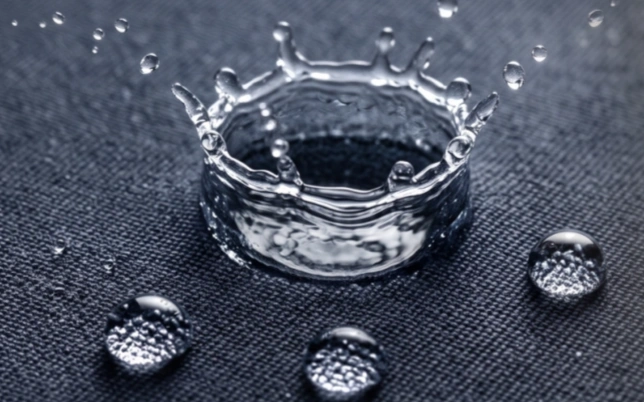
In apparel sourcing, C0 DWR means a non-fluorinated durable water-repellent finish. It is intended to help water bead on the fabric surface. The term describes the finishing chemistry, rather than a waterproof rating or a laboratory result for the finished fabric.
What C0 does:
- Helps the face fabric resist surface wetting so water beads and sheds rather than soaking in immediately.
- Supports outdoor and workwear shells where light rain, splash and surface moisture are part of the use case.
- Gives brands a finishing route that aligns more easily with many modern RSL and “no intentionally added PFAS in the DWR” conversations — subject to the exact project scope.
What C0 does not automatically do:
- It does not turn a woven face into a waterproof barrier. Surface repellency and resistance to water penetration are different requirements.
- It does not replace membrane, coating or seam-sealing decisions for waterproof garments.
- It does not, by itself, prove full-article PFAS compliance for yarn, dyeing auxiliaries, coatings, laminates or contamination risk. Finish route and analytical testing answer different questions.
- It does not guarantee after-wash beading equal to a historical fluorinated finish on every construction. Wash durability must be specified and checked for the program.
For catalog browsing, start with our performance / C0 DWR fabrics and confirm the recorded finish on the product code you actually intend to buy.
C0 DWR vs conventional DWR: what buyers should compare
Use this comparison when a brief says “DWR fabric” without defining chemistry or test expectations.
Chemistry scope
Conventional fluorinated DWR (often discussed as C8 historically, later C6) relies on fluorinated chemistry for oil and water repellency behavior that many older outdoor specs assumed. C0 routes are selected when the program wants water-repellent performance without that fluorinated DWR chemistry. Always ask which substances are in scope for declarations and for testing.
Initial beading vs durability
Both routes can show strong initial spray performance on a well-prepared fabric. The commercial risk is usually after wash, abrasion and real garment care — not the first lab spray on an unused swatch. Agree the wash method, cycle count and target rating early. See DWR after washing.
Oil / stain expectations
Some fluorinated systems were valued for oil and stain resistance as well as water beading. A C0 brief focused on water repellency may not deliver the same oil behavior. If the garment needs oil or stain performance, write that requirement separately instead of assuming it follows from “DWR”.
Compliance narrative
Retailers and brands increasingly ask for non-fluorinated DWR or evidence related to PFAS restrictions. C0 is often the finishing conversation that follows. Still separate (1) intentional chemistry in the DWR, (2) broader “no intentionally added PFAS” process scope, and (3) laboratory results on a defined substance list and method. Our PFAS testing guide explains why a C0 declaration and a PFAS report are not the same document.
Garment construction fit
C0 on a lightweight woven shell for hiking jackets is a different engineering problem from C0 on a heavier workwear cloth that needs wash durability in industrial laundering. Construction, GSM, yarn and after-care change the result as much as the finish name.
Comparing quotations
A request for “C0 DWR fabric” is easier to quote when it includes the garment, test method and wash requirements. If fluorinated DWR is excluded, stating that in the brief helps suppliers quote against the same chemical requirements.
When outdoor and workwear buyers should ask for C0
Ask for C0 DWR — or explicitly exclude fluorinated DWR — when one or more of these apply:
- The brand RSL, retailer manual or destination market expects non-fluorinated water-repellent finishing for the garment class.
- The program already communicates “PFAS-related” or “no intentionally added PFAS in DWR” language to customers or compliance teams.
- You are developing a new outdoor shell, softshell face or performance woven and do not need to lock a legacy fluorinated reorder.
- Workwear or uniform programs want surface water shedding for rain commute / light exposure, and the chemical policy prefers C0 where performance can be met.
- You want the finishing conversation aligned with sampling and bulk from the first lab dip / hand feel round, not reworked after a failed chemical screen.
You may still see conventional DWR language when:
- A legacy style is being reordered against an unchanged approved reference that used fluorinated DWR.
- A buyer has not yet converted the chemical requirement but still quotes historical outdoor specs.
- A performance claim depends on oil/stain behavior that has not been redefined for a C0 system.
Even then, confirm whether the brand will accept the same chemistry going forward. Reorders are a common place for silent policy drift.
Outdoor jackets: how to write the DWR part of the brief
For outdoor woven shells, a useful RFQ fragment looks like this:
- Garment: hiking / travel / padded jacket face fabric
- Function: surface water repellency (not automatic waterproof claim)
- Chemistry: C0 / non-fluorinated DWR preferred; fluorinated DWR not accepted unless stated
- Method: name the spray or beading method you use internally, plus any after-wash target
- Construction targets: composition, GSM, width, hand feel reference if known
- Related claims: if PFAS documentation is required, state whether you need declarations, testing, or both — and on which sample stage
Then browse performance fabrics or send the reference through fabric development.
Avoid collapsing waterproof membrane needs into the DWR line. If the jacket needs a coated or laminated barrier, say so. DWR alone will not carry that requirement.
Workwear and uniforms: when C0 is still the right ask
Workwear buyers sometimes assume DWR chemistry debates belong only to outdoor brands. That is no longer true.
Ask for C0 when:
- Corporate apparel or retailer workwear policies restrict fluorinated finishes.
- Garments see rain exposure in logistics, field service or outdoor retail roles.
- The cloth also needs colorfastness, abrasion and wash durability — and chemical policy must sit beside those tests rather than being implied by “performance fabric”.
Be explicit about care. Industrial laundry or frequent home wash can reduce beading on any DWR system. Specify the care route you will test against, and do not treat first-article spray results as bulk-life proof.
RFQ checklist before you send the inquiry
Include as many of these as you already know:
- Product code(s) from the catalog, or a reference sample / swatch
- Garment application (outdoor shell, workwear, trousers, softshell face, etc.)
- Whether you need surface water repellency only, or also wind / waterproof barrier behavior
- Chemistry preference: C0 / non-fluorinated DWR; any ban on fluorinated DWR
- Test methods and target ratings, including after-wash if relevant
- Any PFAS declaration or laboratory scope required by the brand
- Quantity band and timing for sampling vs bulk discussion
- Company name and destination market
You can share these details through our fabric inquiry form, even if some requirements are still open. We confirm sample availability, price, minimum order quantity and lead time for the selected specification.
If the fabric does not exist as a published SKU, use custom fabric development so construction, color and finishing can be reviewed against your brief before bulk coordination.
Finding a C0 option in our catalog
On cc-textile.com, C0 DWR appears where it is specified on the product. Performance fabrics as a category include multiple constructions and finishes; C0 is not assumed for every article.
The product code is a useful starting point for checking the recorded finish. If you need C0 on another construction, we can review the request during development. Availability and performance still need to be confirmed for that fabric.
Related reading:
- Performance / C0 DWR fabrics
- How we handle PFAS-related requirements
- PFAS-free fabric testing before bulk
- Why DWR performance drops after washing
Frequently asked questions
What is the difference between C0 DWR and conventional DWR?
C0 DWR is non-fluorinated durable water-repellent finishing. C6 and C8 are fluorinated systems, so C6 is not C0. Both routes can produce surface water beading, but oil resistance, wash durability and chemical requirements need separate checks. The finish name does not establish the PFAS status of the whole fabric.
When should outdoor or workwear buyers ask for C0 DWR?
Ask for C0 when brand or retailer policy prefers non-fluorinated DWR, when PFAS-related customer claims are part of the program, when you are starting a new shell development, or when fluorinated DWR is explicitly excluded. Legacy reorders may still reference conventional chemistry — confirm whether that remains acceptable before sampling.
Does C0 DWR mean the fabric is waterproof or fully PFAS-free?
No. C0 DWR addresses surface water repellency via a defined finishing route. Waterproof barrier performance needs separate construction decisions (coating, membrane, seams). PFAS-related compliance needs a clear substance scope, process declarations and, where required, laboratory testing on the agreed sample. A finish name is not a full-article analytical result.
What should I include in a C0 DWR fabric RFQ?
Send product codes or a reference sample, garment application, chemistry preference (C0 / non-fluorinated), test methods and after-wash targets if known, any PFAS documentation needs, quantity band and timing. Use the contact RFQ form. MOQ, price and lead time are confirmed for the selected specification.
Can CC Textile develop a C0 DWR fabric from our sample?
Yes. Share a reference sample or specification through fabric development. We review construction, color, handle and finishing against your brief before discussing bulk coordination. Confirm whether fluorinated DWR is excluded and which water-repellency methods apply.