Production Order Mistakes Start Before Manufacturing Begins
Production order mistakes often happen before brands even start manufacturing. You spend months developing a new collection.
The design looks right. The fabric has been selected. The launch date has already been planned.
Then production starts.
A few weeks later, unexpected problems appear:
The bulk fabric quality is not as stable as expected.
The delivery schedule starts moving.
The approved sample looks good, but the final production does not fully match expectations.
These situations are more common than many brands realize.
After more than 20 years working with fabrics and garment manufacturing, we have learned that many production problems do not happen during manufacturing. They often begin before the production order is placed.
Choosing the right supplier is not only about getting a quotation.
It is also about understanding production capability.
Brands need to consider technical requirements, quality control, and potential risks before fabric production starts.
In this article, we will share eight common production order mistakes we have seen brands make and explain how to avoid them.
Mistake #1: Selecting Suppliers Solely on Price
One of the most common production order mistakes is selecting suppliers solely because their quotation is lower.
Price is important in every business. However, an unrealistically low price often creates pressure throughout the entire supply chain.
For example, when a supplier has very limited profit margin, they may have fewer options to maintain stable quality, invest in production control, or select better supporting suppliers.
In fabric and garment manufacturing, cost, quality, and delivery time are always connected.
A lower price may look attractive at the beginning, but it can create higher costs later:
- Unstable fabric quality
- Additional inspection costs
- Production delays
- Rework or replacement orders
- Missed selling seasons
We have seen brands choose cheaper suppliers and later return because the fabric quality was inconsistent and the final garments could not be launched as planned.
The lowest quotation does not always create the lowest total cost.
We have seen brands choose lower-cost suppliers to reduce their initial budget. However, unstable fabric quality later created additional inspection, replacement, and production problems. In the end, the original price advantage became much smaller compared with the extra time and cost required to solve these issues.
Mistake #2: Starting Production Without a Complete Technical Package
Another common mistake is starting a project with incomplete information.
Some brands provide only a basic description:
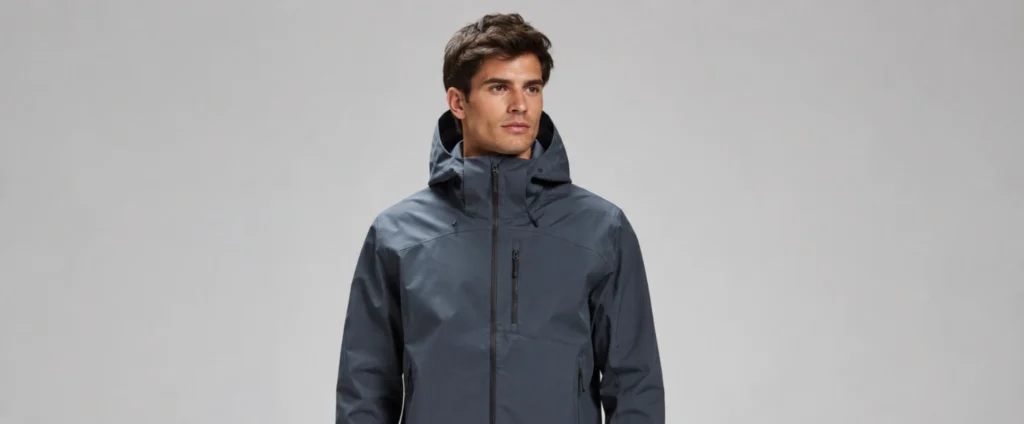
“We need a waterproof jacket.”
But a professional supplier needs much more information before production begins.
For example:
- Fabric composition
- Fabric construction
- Weight (GSM)
- Color standard
- Waterproof requirement
- Breathability requirement
- Testing standards
- Garment measurements
- Sewing details
- Packaging requirements
A detailed technical package helps everyone understand the same target.
Without clear specifications, different suppliers may interpret the product differently. As a result, The sample may look acceptable, but bulk production can create unexpected differences.
Before starting any project, we always recommend brands prepare a complete technical package and discuss potential production challenges early.
Mistake #3: Rushing Sample Approval Under Time Pressure
Speed is important, especially for seasonal products.
However, rushing the approval process can create bigger problems later.
We have seen some brands approve samples quickly because they wanted to save time. The problem appeared after bulk production started.
The sample looked good, but some important details were not fully evaluated:
- Fabric performance after washing
- Color fastness
- Shrinkage
- Functional performance
- Garment fitting after production
A sample is not only for checking appearance.
It is also a chance to verify whether the product can be produced consistently in bulk.
For functional fabrics, outdoor products, and performance garments, testing and confirmation before production can prevent expensive problems later.
Production Order Mistakes #4: Underestimating the Complete Production Lead Time
In many cases, production order mistakes happen because brands only consider manufacturing time and forget the preparation stages.
A complete production process includes:
Fabric development → Lab Dip approval → PP Sample → Bulk fabric production → Garment production → Quality inspection → Shipment
For example, at CC Textile:
Fabric Development Timeline
- Lab Dip: around 5-7 days
- PP Sample: around 7-10 days
- Bulk Fabric Production: around 15-20 days after contract confirmation and deposit received
Garment Production Timeline
- Sample development: around 1-2 weeks
- Bulk production: around 35-50 days depending on style and production requirements
However, production time is not the only factor.
Brands also need time for:
- Sample review
- Testing
- Internal approval
- Design confirmation
- Final decision making
A realistic timeline is always better than a promised timeline that cannot be achieved.
Production Order Mistakes #5: Changing Colors After Production Preparation Begins
Among all production order mistakes, changing colors after production preparation begins is one of the most challenging situations.
Color is not just a visual decision in textile manufacturing.
Once fabric production starts, many steps are already connected:
- Yarn preparation
- Dyeing schedule
- Fabric allocation
- Finishing process
- Production planning
Changing a color after dyeing preparation has started can affect the entire production timeline.
We understand that sometimes brands need to adjust colors because of market feedback or design decisions. However, late color changes usually create additional costs and delays.
From our experience, the best approach is to confirm:
- Color standard
- Lab Dip approval
- Bulk color expectation
- Production timeline
before moving into bulk production.
A few extra days during the approval stage can save weeks of problems later.
Mistake #6: Expecting Low Price and High Quality at the Same Time
One of the biggest misunderstandings in manufacturing is expecting everything at the same time:
- Premium quality
- Lowest possible price
- Fastest delivery
In reality, production always requires balance.
High-quality fabrics require:
- Better raw materials
- More controlled production processes
- Experienced technicians
- More quality checks
For garments, the same principle applies.
A factory needs enough time to manage:
- Cutting
- Sewing
- Quality inspection
- Finishing
- Packing
We have learned that a sustainable partnership cannot be built only around price.
A reliable supplier should help brands understand what is realistic and what may create future risks.
A professional supplier will not simply say “yes” to every request. Sometimes the right answer is explaining why a requirement may need adjustment.
Production Order Mistakes #7: Ignoring Quality Control Before Garment Production
Many brands focus on final garment inspection.
However, by the time a garment is finished, some problems are already expensive to solve.
For example, if a fabric problem is discovered after cutting and sewing, the impact can involve:
- Fabric replacement
- New cutting
- New sewing production
- Additional trims
- Extra labor costs
- Delivery delays
Therefore, this is why we believe quality control should start from the beginning.
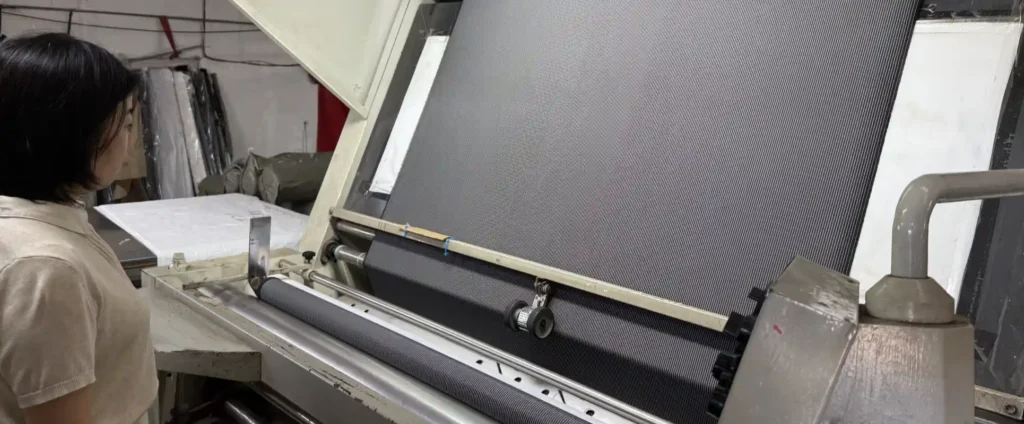
At CC Textile, we inspect fabric from the greige fabric stage.
We choose to inspect fabric from the greige stage because problems found after dyeing, finishing, cutting, or sewing become much more expensive to correct.
If fabric defects are discovered after garments are assembled, the solution may require fabric replacement, new cutting, additional sewing work, and production schedule adjustments.
Why?
Because greige fabric inspection allows us to identify potential issues before dyeing and finishing.
Problems such as:
- Weaving defects
- Broken yarns
- Density issues
- Surface imperfections
can often be found earlier.
After fabric production, we also continue quality control throughout the process.
For garment projects, we provide fabric samples for customers to develop their own samples. Usually, we recommend using 5-10 meters of fabric for garment sample production before moving into bulk orders.
We also arrange production follow-up, inline inspection, and final quality checks.
Our experience has shown that preventing a problem early is always more efficient than fixing a problem after production is completed.
Mistake #8: Treating Suppliers as Mere Vendors, Not Technical Partners
The final production order mistake is treating a supplier as a simple vendor who only provides a quotation.
In modern textile and garment manufacturing, a reliable supplier should provide much more than pricing. They should become a technical partner who helps brands reduce risks before production begins.
A capable manufacturing partner should have a strong understanding of:
Fabric
Including:
- Fiber selection
- Fabric construction
- Dyeing process
- Finishing technology
- Performance requirements
Garment Production
They should understand:
- Pattern development
- Sewing process
- Production flow
- Quality control points
A reliable partner should also understand OEM garment manufacturing processes, from pattern development and sample approval to bulk production and quality control.
Risk Management
They should be able to identify possible problems before they happen.
After more than 20 years in this industry, we believe the biggest value of a supplier is not solving problems after they happen.
The real value is recognizing risks early and preventing them.
Lessons We Learned After 20+ Years in Textile Manufacturing
How We Avoid Production Order Mistakes Through Experience
Over time, every company learns through experience.
One of the biggest lessons we learned is that good intentions alone are not enough in manufacturing.
In the past, we sometimes accepted projects because we wanted to support long-term relationships, even when some requirements were difficult to achieve.
Over time, we realized that honest communication before production is more important than simply accepting every order.
A supplier should clearly explain:
- The recommended solutions
- The achievable results
- The possible adjustments
- The potential risks
Manufacturing is a partnership.
The goal is not only to receive an order.
The goal is to successfully deliver a product that both sides are proud of.
Production Order Mistakes Checklist Before Bulk Manufacturing
Before confirming your next production order, we recommend checking the following:
1. Technical Information
Make sure you have:
✓ Complete technical package
✓ Fabric specifications
✓ Color standards
✓ Testing requirements
✓ Garment measurements
2. Production Planning
Confirm:
✓ Realistic lead time
✓ Sample approval schedule
✓ Fabric production timeline
✓ Final inspection process
3. Quality Control
Discuss:
✓ How fabric quality is controlled
✓ Whether greige fabric is inspected
✓ Whether inline inspection is available
✓ How production issues are handled
4. Supplier Capability
Choose a partner who:
✓ Understands fabrics
✓ Understands garment production
✓ Communicates clearly
✓ Identifies risks before production starts
Frequently Asked Questions
What information should a brand prepare before placing a production order?
A brand should prepare a complete technical package, including fabric requirements, measurements, colors, testing standards, and production expectations.
Clear information helps suppliers provide accurate recommendations and timelines.
Why is the cheapest supplier not always the best choice?
Because lower prices may sometimes come with hidden risks, such as unstable quality, limited production control, or longer problem-solving time.
The lowest price does not always create the lowest overall cost.
How long does garment production usually take?
It depends on the product type, quantity, and complexity.
At CC Textile, garment samples usually take around 1-2 weeks, while bulk production normally requires around 35-50 days.
Why should brands inspect fabric before garment production?
Because fabric problems become much more expensive after cutting and sewing.
Early inspection helps identify potential issues before they affect the entire production process.
What is PPS approval in garment manufacturing?
PPS (Pre-Production Sample) is the final approved sample used as a reference before bulk production.
It confirms important details such as fabric, color, measurements, construction, and finishing.
Can a supplier help identify production risks?
Yes.
An experienced supplier should not only follow instructions but also provide technical recommendations based on real manufacturing experience.
What should brands consider when choosing a Chinese manufacturer?
Brands should evaluate several areas:
- Technical capability
- Production experience
- Quality control system
- Communication ability
- Supply chain management
Price should be only one part of the decision.
Conclusion
Successful production does not start when the factory begins manufacturing.
It starts much earlier — when brands choose the right partner, prepare clear requirements, and understand the real production process.
After decades working with fabrics and garments, we believe the best results come from transparency, technical knowledge, and early risk prevention.
At CC Textile, we support brands from fabric development to garment manufacturing by combining textile knowledge, production management, and quality control experience.
Explore our Functional Fabrics collection or contact our OEM Garment Manufacturing
team to manage your production workflow.
You can also learn more about our experience and manufacturing approach on our About Us page.
We regularly share fabric knowledge, sourcing insights, and production experience on:
LinkedIn:
https://www.linkedin.com/in/cc-textile
Facebook:
https://www.facebook.com/cctextileltd
If you are evaluating a manufacturing partner for your next collection and would like technical recommendations or production advice, our team is happy to help.
Recommended External References
- OEKO-TEX® textile safety standards
https://www.oeko-tex.com/ - SGS Textile Testing
https://www.sgs.com/ - Intertek Textile Testing
https://www.intertek.com/textiles/