Not Every Low Price Is a Good Deal
A few years ago, during a fabric sourcing discussion with a new customer, we were asked a simple question:
“Can you match this price?”
The quotation they showed us was noticeably lower than ours. After reviewing the fabric specification, we knew the target price wasn’t realistic if the supplier intended to use the same yarn quality, finishing process, and quality control standards.
We explained where the difference was likely coming from and why it could affect bulk production. In the end, the customer chose the lower-priced supplier.
Several months later, they came back.
The garments couldn’t be released for sale because the fabric quality varied from batch to batch. Some rolls met the required standard, while others failed inspection. The cost of replacing fabric, delaying production, and missing the launch window far exceeded the money saved on the original quotation.
This wasn’t an isolated case.
After more than 20 years in textile manufacturing, we’ve learned that successful fabric sourcing is rarely about finding the cheapest quotation. It’s about understanding the total cost of production and reducing avoidable risks before they become expensive problems.
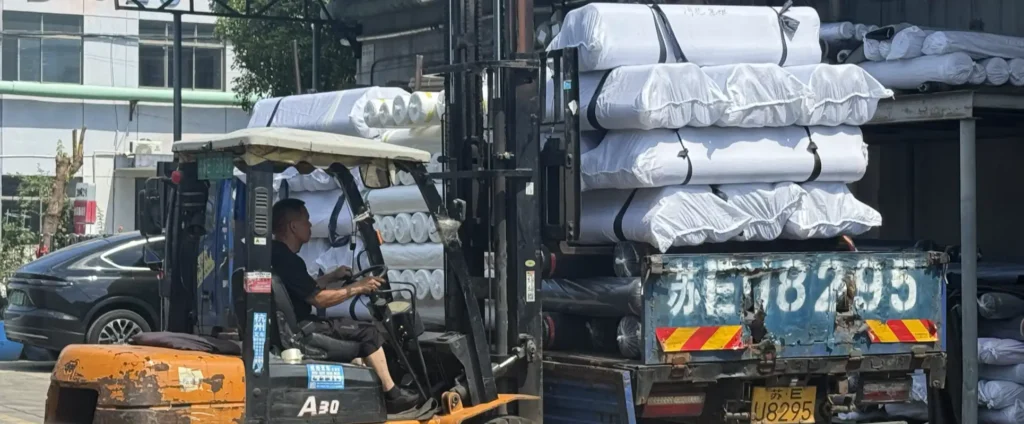
Why Cheap Prices Hurt Fabric Sourcing
When buyers compare quotations, the fabric price is the easiest number to evaluate.
Unfortunately, it’s also the smallest part of the total sourcing cost.
A lower price may be achieved by using different yarn grades, reducing inspection procedures, changing finishing chemicals, outsourcing production to less experienced factories, or simply accepting tighter profit margins that cannot be sustained.
None of these decisions are visible on a quotation sheet.
Most only become apparent after production starts.
The real cost often appears in the form of:
- Production delays
- Inconsistent fabric quality
- Failed laboratory testing
- Additional inspections
- Air freight to recover delivery schedules
- Garments that cannot be shipped
- Time spent resolving quality claims
For clothing brands, the biggest expense is often not the fabric itself.
It’s the disruption caused when production no longer follows the original plan.
Why Fabric Sourcing Should Focus on Total Cost
Many sourcing teams are measured by purchasing cost.
That’s understandable.
However, experienced sourcing managers usually evaluate something different.
They look at the total landed cost, including quality consistency, production stability, communication efficiency, and delivery performance.
Imagine two suppliers.
Supplier A offers fabric at a lower price.
Supplier B costs slightly more.
If Supplier A delivers inconsistent dye lots, causes a three-week production delay, or requires garments to be remade, the original savings disappear almost immediately.
Supplier B may have the higher quotation, but the lower overall project cost.
That’s why experienced buyers rarely evaluate fabric sourcing based on price alone.
They evaluate risk.
Three Hidden Fabric Sourcing Costs Buyers Often Overlook
1. Production Delays Cost More Than Most Buyers Expect
When bulk fabric is delivered late, the entire production schedule moves with it.
Cutting cannot begin.
Sewing lines sit idle.
Shipping dates change.
Retail launch windows may be missed.
In seasonal businesses such as outdoor apparel, ski wear, or fashion collections, missing a delivery window can reduce the commercial value of an entire collection.
Saving a small amount on fabric rarely compensates for losing valuable selling time.
2. Inconsistent Quality Creates Chain Reactions
One issue we occasionally see is that sample fabrics perform well during testing, while bulk production tells a different story.
Sometimes only a few metres are carefully prepared during development, allowing the laboratory sample to pass every required test.
When full-scale production begins, however, maintaining exactly the same process becomes much more difficult.
As a result, bulk fabric may not achieve the same performance as the approved sample.
This can affect waterproof performance, colour fastness, coating adhesion, dimensional stability, or other critical specifications.
Once garments have already been produced, correcting these problems becomes significantly more expensive.
3. Communication Problems Create Invisible Costs
Not every problem is technical.
Some are simply communication failures.
We’ve seen projects where production issues were identified early but weren’t shared with the customer until the agreed delivery date was approaching.
By then, there were very few options left.
In our experience, transparent communication is one of the most valuable parts of professional fabric sourcing.
Customers don’t expect manufacturing to be perfect.
They expect to be informed early enough to make informed decisions.
What Fabric SourcingHas Taught Us After 20+ Years
Looking back, one lesson stands out.
Early in our career, we sometimes accepted projects simply because we wanted to help customers or maintain long-term relationships.
Even when we believed certain requirements would be extremely difficult to achieve consistently, we tried to make them work.
Sometimes customers would say,
“That’s okay. We understand the limitation.”
The problem came months later.
If those discussions hadn’t been confirmed in writing, everyone remembered them differently.
That experience changed how we manage projects today.
Now, whenever specifications, tolerances, testing requirements, or delivery expectations change, we confirm every important detail before production continues.
Clear documentation protects both the customer and the supplier.
What We Look For During Fabric Sourcing
If we were choosing a supplier today, these questions would matter far more than finding the lowest quotation.
Does the supplier understand the product?
Technical knowledge is far more valuable than simply providing prices.
A supplier should understand fabric construction, finishing processes, testing standards, and the final application.
Is someone following production?
Professional production follow-up reduces risk.
At CC Textile, we inspect greige fabric before production and assign dedicated personnel to monitor fabric manufacturing, garment production, inline inspections, final inspections, and communication throughout the project.
Early intervention usually prevents much larger problems later.
Does the supplier communicate honestly?
Good suppliers don’t wait until delivery day to report problems.
They communicate early, explain the situation clearly, and discuss practical solutions before small issues become expensive ones.
Building Long-Term Value in Fabric Sourcing
Price will always be part of every purchasing decision.
There’s nothing wrong with negotiating.
However, we’ve found that the strongest business relationships are built on consistency rather than the lowest quotation.
Reliable quality.
Stable lead times.
Honest communication.
Professional production management.
These are the factors that reduce sourcing risk year after year.
Before making your next sourcing decision, consider the total cost—not just the fabric price.
Explore our Functional Fabrics collection or contact our OEM Garment Manufacturing team to manage your production workflow.
If you’d like to learn more about how we approach textile manufacturing and production management, you can also visit our About Us page, where we share our experience, manufacturing philosophy, and supply chain approach.
We regularly publish practical sourcing insights on LinkedIn and answer common textile questions on Quora for brands looking to make better sourcing decisions.
Frequently Asked Questions
Is the cheapest fabric always the most cost-effective?
Not necessarily. A lower quotation can lead to higher overall costs if quality issues, production delays, or failed testing occur during bulk production.
How can buyers improve fabric sourcing?
Work with suppliers who understand fabric development, monitor production closely, and communicate potential issues before they affect delivery.
Why can bulk fabric differ from approved samples?
Small laboratory samples are easier to control. Bulk production introduces more variables, making process consistency much more important.
What is the biggest hidden cost in fabric sourcing?
Production delays and inconsistent quality usually create greater financial impact than small differences in fabric price.
How does CC Textile manage quality?
We begin with greige fabric inspection, monitor every production stage, and perform both full inspections and sampling inspections from fabric production through garment manufacturing.
Stay Connected
We regularly share practical sourcing advice, fabric innovations, and real production experiences through our social channels.
https://www.linkedin.com/in/cc-textile