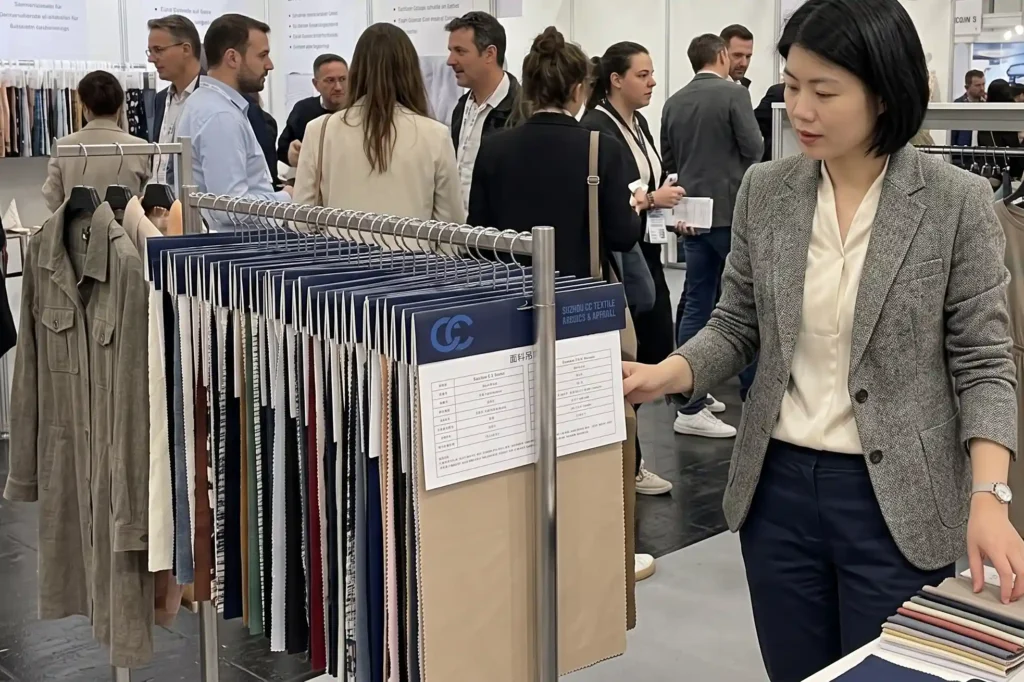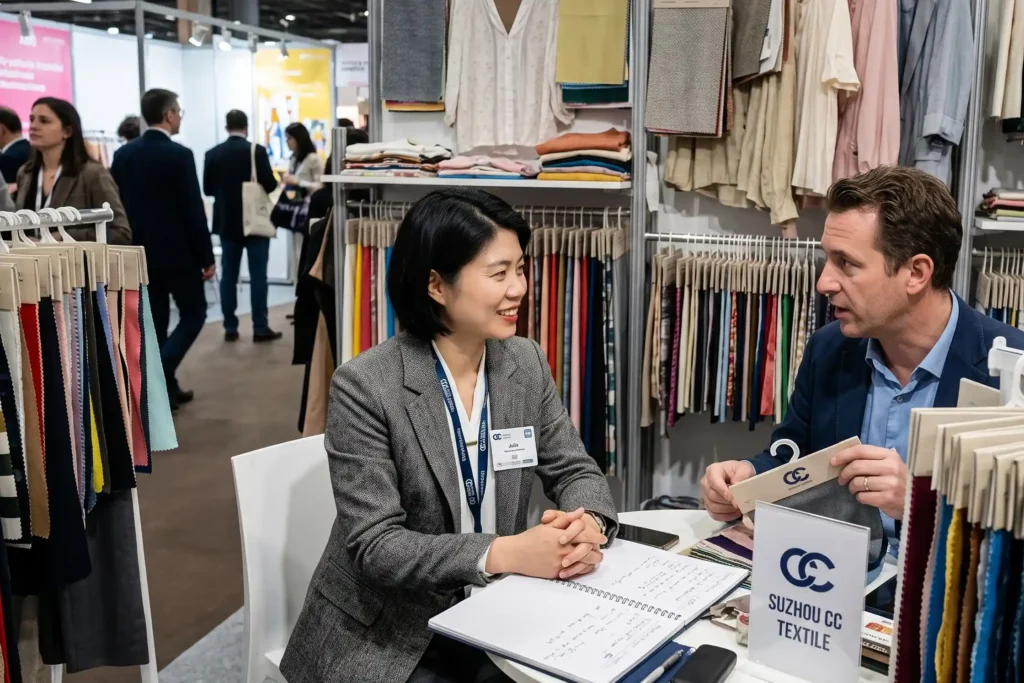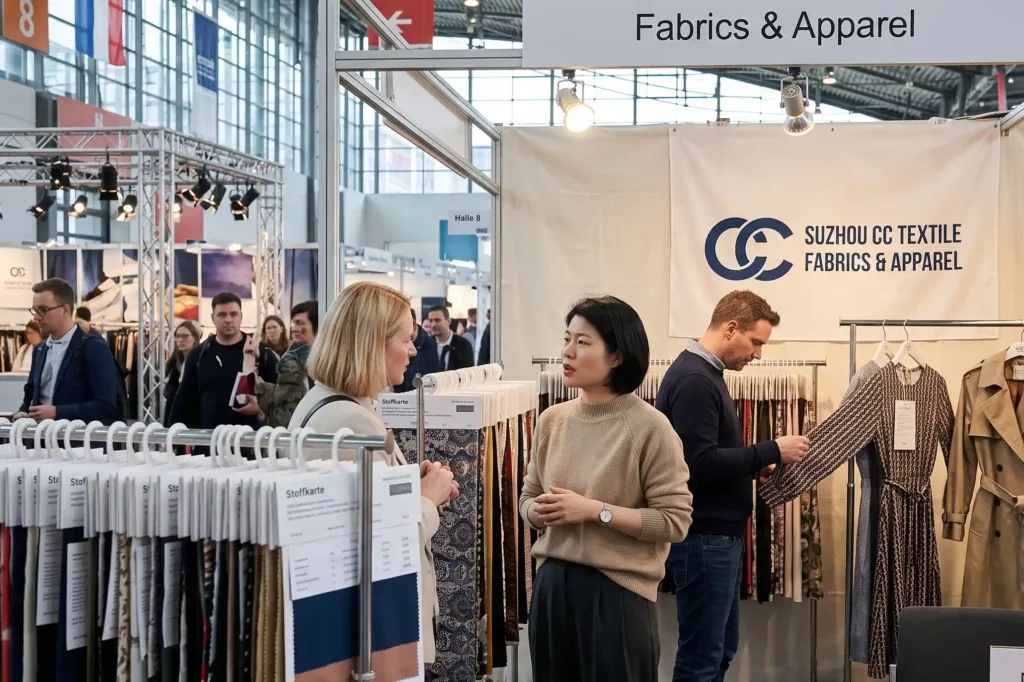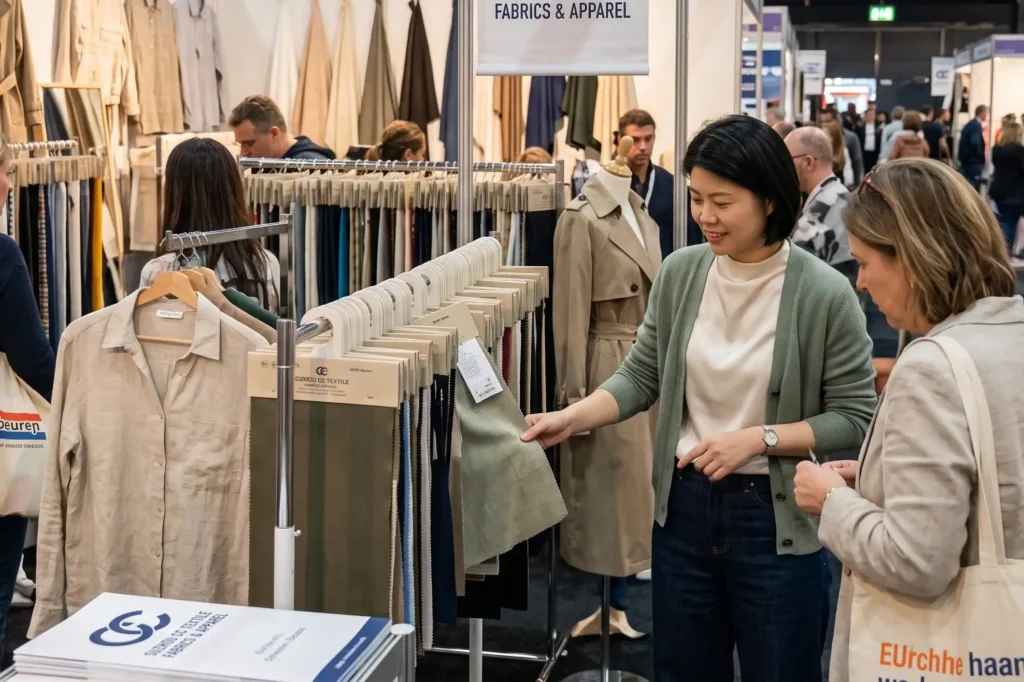
- The lowest quotation doesn’t always result in the lowest sourcing cost.
- A reliable fabric supplier should reduce production risks—not create new ones.
- Strong technical knowledge, production follow-up, and transparent communication matter more than attractive promises.
- Most quality and delivery problems can be prevented before production starts.
- Long-term partnerships are built on consistency, not on the cheapest price.
Every Supplier Looks Great Before You Place an Order
Finding a fabric supplier has never been easier.
A quick online search returns thousands of manufacturers, trading companies, and sourcing agents. Almost every website promises high quality, competitive prices, fast delivery, and excellent service.
On paper, they all look impressive.
The real difference only becomes clear after production begins.
We’ve worked in woven fabric and garment manufacturing for more than twenty years, and we’ve seen the same situation happen repeatedly.
A buyer compares several quotations, chooses the lowest price, approves the sample, and feels confident that everything is under control.
A few weeks later, the project starts slipping.
The delivery date moves.
Fabric quality becomes inconsistent.
Test results don’t match earlier samples.
Communication becomes slower.
Eventually, the savings from the original quotation disappear because the real cost was never the fabric price—it was the production risk.
One of the biggest lessons we’ve learned over the years is simple:
A fabric supplier shouldn’t be judged by how smoothly things go when everything is easy. A supplier proves their value when unexpected problems appear.
That’s when technical knowledge, production management, and honest communication become far more valuable than a slightly lower quotation.
Price Is Visible. Risk Is Not.
Every buyer compares prices.
There’s nothing wrong with that.
Pricing is an important part of sourcing, especially in today’s competitive market.
The problem starts when price becomes the only factor.
Many hidden costs don’t appear on the quotation sheet.
They appear weeks later.
For example:
- Production delays that cause missed delivery windows.
- Fabric quality that changes from batch to batch.
- Failed laboratory or brand performance tests.
- Additional air freight to recover lost time.
- Garments that cannot be shipped because the fabric doesn’t meet specifications.
- Endless email discussions trying to determine who is responsible.
We’ve seen projects where a supplier saved a customer a few cents per meter, only to create thousands of dollars in additional costs during production.
One customer we worked with had originally chosen another supplier because the quotation was lower.
The price looked attractive.
Unfortunately, bulk production quality was inconsistent from one batch to another.
When the garments entered production, the variations became obvious.
Some pieces met the required standard.
Others didn’t.
The brand couldn’t release the collection with inconsistent quality, and the product launch had to be postponed.
Eventually, the customer returned to us.
Not because we offered the lowest price.
But because they needed predictable quality, stable production, and a supplier who could identify problems before they reached the sewing line.
That experience reinforced something we’ve believed for many years:
The cheapest quotation can easily become the most expensive order.
What Makes a Reliable Fabric Supplier?
There isn’t a single answer.
But after working with outdoor brands, workwear manufacturers, fashion labels, and garment factories for more than two decades, we’ve found that reliable suppliers usually have several characteristics in common.
The first has nothing to do with price.
They Understand Fabrics Instead of Simply Selling Fabrics
When a buyer asks for a waterproof fabric, an inexperienced supplier often replies:
“Yes, we can make that.”
A technical supplier usually asks different questions.
What hydrostatic head is required?
Is breathability important?
Will the garment use seam sealing?
How many washing cycles should the performance last?
What is the end use—hiking, skiing, workwear, or everyday outdoor clothing?
Those questions matter because “waterproof fabric” isn’t a complete specification.
The same applies to stretch fabrics, recycled fabrics, laminated fabrics, and coated fabrics.
Without understanding the application, it’s impossible to recommend the right construction.
In our experience, suppliers who ask more questions before production usually create fewer problems during production.
They Stay Involved After the Order Is Placed
Many suppliers are highly responsive before receiving the purchase order.
After production begins, communication gradually slows down.
Updates become less frequent.
Problems are reported late.
Sometimes they’re not reported until the expected shipping date has already passed.
We believe production follow-up is just as important as product development.
Our team follows each project from greige fabric inspection through weaving, dyeing, finishing, fabric inspection, garment production, inline inspection, and final inspection.
Not because problems happen every day.
But because when they do happen, early action usually prevents much larger problems later.
They Solve Problems Instead of Avoiding Them
No supplier can honestly promise that production will always go exactly as planned.
Machines break down.
Raw material prices fluctuate.
Dye lots behave differently.
Testing sometimes produces unexpected results.
These are all part of textile manufacturing.
The real question isn’t whether problems will happen.
It’s how the supplier responds when they do.
Over the years, we’ve seen some suppliers disappear the moment production becomes difficult.
Phone calls go unanswered.
Emails take days to receive a reply.
Instead of explaining the situation, they wait until the original delivery date has already passed.
By then, it’s too late for the customer to make alternative arrangements.
A reliable supplier behaves differently.
They communicate early.
They explain the cause of the problem.
More importantly, they present practical solutions instead of excuses.
In our experience, buyers are usually understanding when they’re informed early.
What damages trust is silence.
Clear communication doesn’t eliminate production risks, but it gives everyone time to make better decisions.
They Identify Problems Before Production Begins
One principle has guided almost every project we’ve managed:
The best time to solve a problem is before production starts.
Once fabric enters bulk production, every mistake becomes more expensive.
If cutting has already started, correcting a fabric issue becomes even more difficult.
Once garments are sewn, many problems simply can’t be fixed economically.
That’s why we spend a significant amount of time reviewing projects before bulk production begins.
We look at questions such as:
- Does the selected fabric actually suit the garment’s end use?
- Are the required physical performance standards realistic?
- Have all testing requirements been clearly defined?
- Is the requested lead time achievable?
- Have potential production risks been discussed with the customer?
Finding these issues early saves far more time than trying to repair finished products.
For us, production doesn’t begin when the machines start running.
It begins when every important question has been answered.
What Most Buyers Don’t Realize
Most buyers compare suppliers by looking at quotations.
We understand why.
Price is easy to compare.
Production management isn’t.
But after watching hundreds of projects over the years, we’ve reached a different conclusion.
A supplier isn’t valuable because they never encounter problems.
They’re valuable because they know how to prevent small problems from becoming expensive ones.
Two suppliers may quote almost the same fabric.
One simply forwards production updates.
The other actively monitors production, reviews technical details, follows testing, and keeps the customer informed throughout the process.
The fabric may look identical on the quotation sheet.
The sourcing experience is completely different.
That’s something many buyers only discover after placing the order.
One Lesson We Learned After More Than 20 Years
One lesson has stayed with us throughout our career.
Many years ago, we accepted a project mainly because we wanted to maintain a good relationship with the customer.
Deep down, we already knew some of the requested performance requirements would be extremely difficult to achieve consistently in bulk production.
We explained the risks.
The customer replied,
“It’s okay. We understand.”
Wanting to help, we moved forward.
Months later, the garments didn’t perform as expected in the market.
The discussion returned to those same technical limitations.
The difference was that the earlier conversation had never been confirmed by email.
Everyone remembered it differently.
That experience changed the way we manage projects.
Today, whenever specifications change, tolerances are adjusted, or special requests are accepted, we always confirm them in writing before production continues.
Some people think it’s unnecessary paperwork.
We see it as protecting both sides.
Good communication isn’t just about responding quickly.
It’s about making sure everyone remembers the same agreement months later.
One Industry Myth We Don’t Believe
One sentence we’ve heard countless times is:
“There must be a supplier who offers the lowest price, the highest quality, and the best service.”
It’s an attractive idea.
Unfortunately, manufacturing doesn’t work that way.
High-quality raw materials have real costs.
Experienced technicians require investment.
Quality inspections take time.
Stable production planning depends on experienced people.
Professional communication isn’t free.
Can production become more efficient?
Absolutely.
Can technology improve productivity?
Without question.
But expecting premium quality, reliable delivery, expert technical support, and the lowest price at the same time usually creates unrealistic expectations.
Instead of asking,
“Who has the cheapest quotation?”
we encourage buyers to ask,
“Who is most likely to deliver exactly what we need, when we need it?”
In our experience, that question leads to much better sourcing decisions.
Our Principle
Every company develops its own philosophy over time.
Ours is simple.
We would rather explain a limitation before production than apologise after shipment.
If we believe a fabric specification cannot realistically be achieved with current materials or production methods, we’ll say so.
Sometimes that means adjusting the specification.
Sometimes it means recommending another construction.
Occasionally, it means advising a customer not to proceed until the technical risks are better understood.
That conversation isn’t always easy.
But we’ve learned that honesty at the beginning builds stronger partnerships than unrealistic promises.
Trust isn’t created by saying “yes” to everything.
It’s created by giving customers reliable information they can make decisions with.
If We Were Choosing a Fabric Supplier Today
After spending more than two decades in textile manufacturing, our priorities are very different from when we first entered this industry.
If we were sourcing fabrics for our own brand today, these would be the first questions we’d ask.
Does the supplier understand the fabric or simply quote the fabric?
Anyone can forward a price list.
A reliable supplier should be able to explain why one fabric construction is more suitable than another, how different finishing processes affect performance, and where potential risks may appear during production.
Technical advice before production often saves far more money than solving problems afterwards.
Who follows production after the purchase order is issued?
Many sourcing problems don’t happen during quotation.
They happen after production begins.
Ask who will monitor weaving, dyeing, finishing, inspections, testing, and delivery.
If nobody owns the project from beginning to end, communication gaps become much more likely.
How does the supplier communicate when something goes wrong?
No production process is completely free of challenges.
The important question is whether the supplier informs you early enough to make informed decisions.
We’ve always believed that customers deserve to know the truth as soon as we know it ourselves.
Early communication allows everyone to adjust production plans, shipping schedules, or alternative solutions before a small issue becomes a major delay.
Are potential risks reviewed before bulk production?
This is one of the questions we believe more buyers should ask.
Before production starts, both sides should review:
- Technical specifications
- Fabric construction
- Performance requirements
- Testing standards
- Production lead time
- Packaging requirements
- Delivery schedule
The more details confirmed before production, the fewer surprises after shipment.
Buyer Checklist Before Choosing a Fabric Supplier
Before placing your next order, it may be worth asking these questions.
✔ Does the supplier understand the end use of the fabric?
✔ Can they explain technical details instead of simply sending quotations?
✔ Do they have someone following production from fabric to garment?
✔ How are quality issues handled if they appear during production?
✔ Are production updates provided proactively?
✔ Is there a clear quality control process?
✔ Are technical changes confirmed in writing?
✔ Do they identify risks before production begins?
If several answers are unclear, it may be worth asking more questions before placing the order.
Choosing a supplier is much easier than changing one after production has already started.
Frequently Asked Questions
Should I always choose the lowest quotation?
Not necessarily.
A lower fabric price can sometimes lead to higher overall costs if quality, communication, or delivery become unstable. Looking at the total sourcing cost usually provides a more accurate picture than comparing fabric prices alone.
Is it better to work directly with a factory?
Not always.
Some factories produce excellent fabrics but focus only on manufacturing.
Some experienced sourcing companies provide stronger technical support, broader supply chain management, and better project coordination.
The key is understanding who is responsible for your project and how production is managed.
How can I tell whether a supplier really understands fabrics?
Ask technical questions.
A knowledgeable supplier should discuss yarn selection, fabric construction, finishing processes, testing standards, and the intended application instead of immediately providing a quotation.
What should happen before bulk production starts?
Important details such as fabric specifications, performance requirements, color approval, production lead time, testing methods, packaging, and inspection standards should all be confirmed before manufacturing begins.
How important is production follow-up?
It’s one of the most overlooked parts of sourcing.
Regular production follow-up helps identify potential issues early, reducing the risk of delays, quality claims, and unexpected surprises later.
Can certifications alone guarantee product quality?
Certifications are valuable because they demonstrate compliance with specific standards.
However, they cannot replace consistent production management, technical expertise, or effective communication throughout the manufacturing process.
Why do some suppliers ask so many technical questions?
Because experienced suppliers know that asking more questions before production usually means solving fewer problems afterwards.
Final Thoughts
Choosing a fabric supplier isn’t simply about comparing prices.
It’s about deciding who will help protect your project when production becomes complicated.
Throughout our years in textile manufacturing, we’ve learned that successful sourcing depends on three things more than anything else:
Technical knowledge.
Consistent production management.
Honest communication.
Price will always be part of the conversation.
But the suppliers who create long-term partnerships are usually the ones who help customers reduce risk—not just reduce quotations.
If you’re evaluating fabric suppliers for an upcoming collection and would like to discuss fabric construction, production planning, or potential manufacturing risks, we’re always happy to exchange ideas based on practical production experience.
To learn more about who we are and how we work, visit our About Us page:
We also share textile insights and sourcing experience on LinkedIn:
https://www.linkedin.com/in/cctextile
You can find additional sourcing discussions and practical answers on Quora: