Recycled Nylon Fabric: Is It Really Different from Virgin Nylon?
Recycled Nylon Fabric has become a regular sourcing request for outdoor and performance apparel, particularly from brands with established sustainability targets. We develop it for hiking pants, outdoor jackets, windbreakers and sportswear, using constructions from lightweight 20D nylon through stretch woven fabrics with Spandex.
But there is one question we hear repeatedly from sourcing teams:
Does recycled nylon actually perform differently from virgin nylon?
From our production experience, the difference is often smaller than buyers expect.
For many apparel applications, the decision to use recycled nylon is driven less by a dramatic performance advantage and more by the brand’s sustainability strategy, recycled-content targets and supply-chain responsibility.
That does not make the choice less important. It simply means Recycled Nylon Fabric should be sourced for the right reasons—and evaluated using the same serious performance standards as virgin nylon.
1. Recycled Nylon vs Virgin Nylon: What Actually Changes?
Virgin nylon is produced from new petrochemical feedstock, while recycled nylon uses recovered nylon material as its raw-material source. For a brand, that distinction can support broader sustainability and recycled-content objectives.
Once we begin developing the actual textile, however, the sourcing conversation becomes much more familiar.
A Recycled Nylon Fabric still has to achieve the required weight, construction, hand feel, tear performance, color fastness, dimensional stability and functional finishing performance for the garment.
In our own production experience, we do not see a universal performance gap large enough to say that recycled nylon is simply “better” or “worse” than virgin nylon.
That is why we prefer not to sell recycled nylon on exaggerated performance claims.
If the customer wants recycled material because it supports a sustainability program, we develop around that requirement. The finished fabric still has to perform as a fabric.
2. What Specifications Can Be Developed in Recycled Nylon?
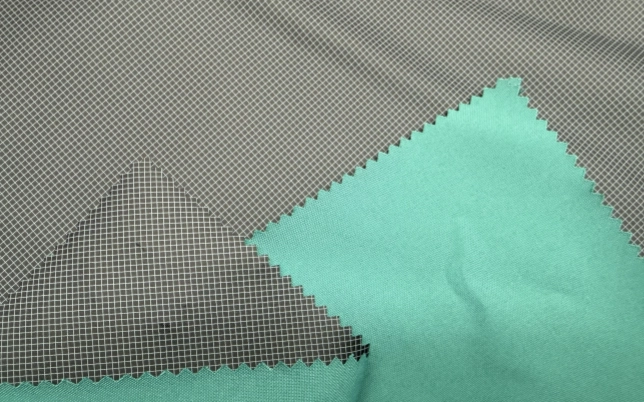
Our regular Recycled Nylon Fabric developments include 20D, 40D and 70D constructions, including Nylon/Spandex options where stretch and mobility are required.
Common development weights include approximately:
| Construction Direction | Typical Weight Direction | Possible Applications |
|---|---|---|
| 20D Recycled Nylon | Around 40–65 GSM depending on construction | Lightweight shells, windbreakers |
| 40D Recycled Nylon | Around 65–80 GSM depending on construction | Outdoor jackets, lightweight sportswear |
| 70D Recycled Nylon | Around 80–115 GSM depending on construction | Jackets, hiking and performance apparel |
| Recycled Nylon + Spandex | Application dependent | Hiking pants, stretch outerwear, sportswear |
These are development references rather than fixed specifications. Yarn density, weave construction, stretch content and finishing can change the final GSM considerably.
For a lightweight recycled nylon fabric, reducing weight also means that yarn strength, fabric density and tear performance need to be considered carefully. The objective should not simply be to reach the lowest GSM.
3. Can Recycled Nylon Use the Same Functional Finishes?
In our production, yes.
The Recycled Nylon Fabric we develop can go through the same types of functional finishing used for our virgin nylon fabrics. Depending on the customer’s product requirements, we have worked with C0 DWR, moisture-wicking, UPF protection, coating, TPU lamination, anti-static treatments, brushing and other functional finishes.
This matters because choosing recycled yarn should not automatically force the product team to give up the performance characteristics required by the garment.
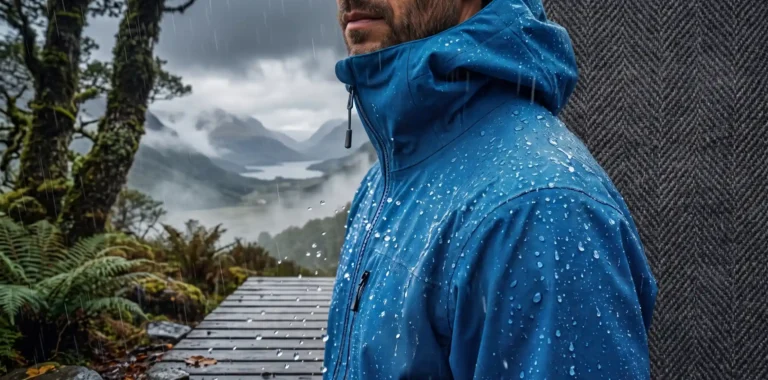
For example, a brand developing a recycled nylon outdoor jacket may still require a combination of lightweight construction, water repellency and waterproof/breathable lamination. A hiking-pants program may instead prioritize stretch, abrasion performance, quick drying and UPF.
The finishing route should follow the end use rather than the word “recycled” on the fiber specification.
4. GRS Is Part of the Sourcing Requirement, Not a Performance Test
For many customers buying GRS certified recycled nylon fabric, traceability is one of the first requirements discussed.
GRS documentation is important because a recycled-material claim needs supporting supply-chain controls. But sourcing teams should distinguish between recycled-content certification and fabric performance testing.
They answer different questions.
GRS supports the recycled-material and chain-of-custody side of the program. Tests for water repellency, tear strength, color fastness, dimensional stability or other physical properties evaluate whether the textile performs according to the garment specification.
Depending on customer requirements, finished fabrics can also be submitted to SGS, Intertek (ITS), Bureau Veritas (BV), or another customer-appointed third-party laboratory.
For a sourcing manager, the useful question is therefore not simply:
“Is it recycled?”
It is:
Can the supplier support the recycled claim and still deliver the required finished-fabric performance consistently?
5. PFAS Control Can Be More Complicated Than the Fabric Development
A recent Recycled Nylon Fabric order is a good example.
The project covered European, U.S. and Australian market requirements and used a 400T recycled nylon construction in 20D × 20D. In addition to GRS requirements, downproof performance was important because of the intended product.
The customer’s PFAS specification was also particularly strict: each specified PFAS substance needed to remain below 25 ppb.
The fabric construction itself did not create a major development problem. The difficult part was making sure that PFAS contamination did not appear somewhere along the production route.
Instead of waiting until the finished material was ready, we tested repeatedly.
A Real 400T Recycled Nylon Order: Testing PFAS at Three Stages
For this order, our control process started before the greige fabric entered the dyehouse.
The greige fabric was tested for PFAS first. After dyeing, we tested again. Once functional finishing was completed, the finished fabric was tested for a third time.
Greige Fabric → PFAS Test → Dyeing → PFAS Test → Finishing → PFAS Test → Customer/Third-Party Verification
Yes, it made the production process more complicated.
But there was a practical reason for doing it this way.
If testing only takes place after all processing is complete and a PFAS issue appears, determining where the contamination entered the process becomes much more difficult. By checking at different production stages, we have better visibility into the production route and can address a problem earlier if one appears.
The finished order met the customer’s specified requirements, including the required GRS documentation, downproof performance and PFAS control target.
For us, the extra testing was worth it—not because it made production simpler, but because both our team and the customer had greater confidence in the finished bulk fabric.
C0 DWR, Non-PFAS Finishing and Recycled Nylon
Using Recycled Nylon Fabric does not automatically make the complete textile PFAS compliant. Fiber content and finishing chemistry are separate sourcing considerations.
When water repellency is required, we can work with C0 DWR / non-PFAS / fluorine-free water-repellent finishing according to the customer’s specification.
However, we are careful with the wording used around PFAS.
In a textile supply chain involving raw materials, dyeing, machinery, water, auxiliaries and finishing processes, simply saying that a fabric contains “zero fluorine” is a much stronger statement than many suppliers can responsibly prove.
For projects with a defined PFAS limit, we prefer a measurable approach: work to the customer’s specified regulatory/test limit and verify the result through testing.
That is much more useful to a sourcing team than an unsupported “PFAS-free” claim.
Does Recycled Nylon Sacrifice Performance?
Not necessarily.
In our actual development experience, recycled nylon vs virgin nylon is often a much less dramatic performance comparison than buyers initially expect.
The garment still determines what matters.
A Recycled Nylon Fabric for hiking pants needs appropriate stretch, recovery and durability. A lightweight windbreaker needs low weight, controlled air permeability and the required water repellency. An outdoor shell may need TPU lamination and defined waterproof/breathability targets.
Those requirements should still be tested.
The recycled origin of the yarn should never become an excuse for lower technical standards.
Why Are Brands Choosing Recycled Nylon?
For most of the programs we see, the strongest reason is sustainability, rather than a claim that recycled nylon inherently outperforms virgin nylon.
Brands are under increasing pressure to consider where materials come from, how products are manufactured and how purchasing decisions fit into broader environmental and social-responsibility goals.
We think that is a legitimate reason on its own.
A material does not need an invented performance advantage to justify its use.
If a Recycled Nylon Fabric can meet the garment’s required performance while also supporting the brand’s recycled-material strategy, it becomes a practical way for the textile supply chain to contribute to more responsible material use.
The key is making sure the environmental story is backed by traceability, appropriate certification, controlled production and test results rather than marketing language alone.
What Should Buyers Ask a Recycled Nylon Fabric Supplier?
Before approving a recycled nylon development, sourcing teams should look beyond fiber content and ask how the complete program will be controlled.
| Sourcing Question | Why It Matters |
|---|---|
| What recycled content is specified? | Defines the actual material requirement |
| Can the supply chain support GRS requirements? | Supports traceability and recycled claims |
| What is the yarn denier and GSM? | Determines suitability for the garment |
| Can Spandex be incorporated? | Important for hiking pants and stretch apparel |
| Which functional finishes are available? | Determines final garment performance |
| What PFAS requirement applies? | Influences chemistry, production controls and testing |
| When is testing performed? | Helps identify problems before finished bulk |
| Which third-party laboratory is required? | Aligns verification with the buyer’s compliance program |
This is particularly important for brands looking for a custom recycled nylon fabric supplier. A recycled yarn certificate is only one part of the development; the finished fabric still has to survive the same sourcing and quality review as any other technical textile.
Custom Recycled Nylon Fabric Development
At CC Textile, we develop Recycled Nylon Fabric for hiking pants, outdoor jackets, windbreakers and sportswear, including lightweight 20D, 40D and 70D constructions and Nylon/Spandex options.
Development can begin with an existing reference swatch or a new technical specification. Depending on the program, we can adjust yarn specification, construction, GSM, stretch and functional finishing around the final garment requirements.
Browse our performance and functional fabric collection or learn more about our custom fabric development services.
If your program has specific GRS, PFAS, C0 DWR, GSM, stretch or third-party testing requirements, contact the CC Textile development team with the specification before sampling begins.
Recycled Nylon Fabric FAQ
Is recycled nylon as strong as virgin nylon?
There is no responsible universal answer based on fiber origin alone. Performance depends on yarn specification, fabric construction and processing. In our own developments, the practical performance difference is often smaller than buyers expect, but the finished fabric should still be tested against the garment’s required strength and durability standards.
Can Recycled Nylon Fabric be made with Spandex?
Yes. We develop recycled nylon constructions with Spandex when the garment requires stretch and mobility, including applications such as hiking pants and performance apparel.
Can recycled nylon receive C0 DWR?
Yes. In our production, recycled nylon can receive the same functional finishing directions we use with virgin nylon, including C0 DWR and other application-specific finishes.
What does GRS mean when sourcing recycled nylon?
For buyers, GRS is relevant to recycled content and supply-chain traceability. It should not be confused with a physical performance test for characteristics such as tear strength, waterproofing or color fastness.
Does GRS certification mean the fabric meets PFAS requirements?
No. They address different requirements. PFAS compliance needs to be evaluated against the applicable customer or regulatory specification and verified through appropriate testing.
Can 20D Recycled Nylon Fabric be used for lightweight outdoor apparel?
Yes, depending on construction and required performance. We work with 20D recycled nylon for lightweight applications, but GSM, density, tear performance, finishing and end use should be evaluated together.
How should PFAS be controlled during recycled fabric production?
For strict customer specifications, testing only the final fabric may provide less visibility into where contamination occurred. In our 400T 20D × 20D project, we tested at greige, post-dyeing and post-finishing stages before final verification.
Final Thoughts
Recycled Nylon Fabric should not be treated as a miracle material, and it does not need to be.
From what we see in actual fabric development, its biggest value to many brands is straightforward: it helps them move toward recycled-material and sustainability goals while still developing the technical performance required for outdoor and performance apparel.
The important part is what happens after the recycled yarn is selected.
GRS traceability, fabric construction, functional finishing, PFAS control and third-party verification all need to work together before a recycled material becomes a reliable bulk fabric.
That is the difference between making a sustainability claim and actually managing a sustainable-material program.
Explore CC Textile fabrics, learn more about our fabric development capabilities, read our latest textile sourcing articles, or learn more about CC Textile.
For a recycled nylon development, contact CC Textile with your composition, denier, GSM, recycled-content, GRS, finishing, PFAS and testing requirements.
Follow CC Textile on LinkedIn, Instagram, Facebook and TikTok.
RecycledNylonFabric #SustainableTextiles #FabricSourcing #OutdoorFabric #GRSCertified