When developing winter outerwear, selecting the right cotton jacket fabric is one of the most important decisions for brands and sourcing teams. Many people focus mainly on the filling material, such as polyester padding or synthetic insulation, but the outer shell fabric determines how the jacket feels, performs, and looks after production.
A winter jacket is a complete fabric system. The shell fabric, insulation, and lining must work together.
The wrong shell material can lead to common problems:
- The jacket feels cold in windy conditions
- The fabric becomes too stiff after coating
- The garment loses its premium appearance after washing
- Bulk production quality differs from approved samples
For many padded jackets, work jackets, and outdoor winter garments, polyester nylon cotton fabric has become a practical choice because it combines durability, comfortable hand feel, and good finishing compatibility.
One example is a woven fabric with:
- Warp: 160D polyester and nylon composite yarn
- Weft: Cotton 21S yarn
- Composition: 48% Polyester / 7% Nylon / 45% Cotton
- Weight: Approximately 180 GSM
This type of construction provides a balanced solution for brands looking for a winter shell fabric with both functional performance and a more premium appearance.
Why Cotton Jacket Fabric Selection Matters for Winter Jackets
A common mistake in product development is choosing the outer fabric only based on price or appearance.
In reality, the shell fabric influences several important performance factors.
1. Wind Protection
Winter jackets need to reduce cold air penetration.
Even when a jacket contains enough filling, wind entering through the outer fabric can reduce thermal comfort.
A suitable cotton jacket fabric should provide:
- Stable woven construction
- Appropriate fabric density
- Good compatibility with wind-resistant finishing
This is especially important for:
- Outdoor winter jackets
- Workwear jackets
- Casual cold-weather outerwear
2. Hand Feel and Product Appearance
The fabric surface is often the first thing customers notice.
Compared with standard polyester fabrics, polyester nylon cotton blends provide a more natural and textured appearance.
The cotton component improves:
- Softness
- Natural touch
- Fabric visual quality
The polyester and nylon components improve:
- Strength
- Shape retention
- Durability
This balance helps brands create winter jackets that feel more premium without significantly increasing production complexity.
3. Fabric Stability During Production
For garment brands, consistency between sample development and bulk production is critical.
A fabric may look excellent during initial sampling but create problems later if production control is unstable.
Common risks include:
- Different hand feel between batches
- Uneven coating results
- Color variation after finishing
- Changes in fabric stiffness
Therefore, selecting a reliable cotton jacket fabric supplier with stable finishing control is as important as selecting the fabric structure itself.
Why Polyester Nylon Cotton Fabric Works Well as Cotton Jacket Fabric
Polyester nylon cotton fabric combines three different fiber characteristics.
Each component contributes to the final performance.
Polyester: Stability and Cost Control
Polyester is widely used in outerwear because it provides:
- Good dimensional stability
- Resistance to wrinkles
- Reliable production performance
For winter jackets, polyester helps maintain garment shape during daily wear and repeated washing.
Nylon: Durability and Abrasion Resistance
Although the nylon percentage may be lower in a blend, it improves the fabric’s functional performance.
Nylon contributes:
- Better abrasion resistance
- Stronger yarn performance
- Improved durability
This is useful for garments exposed to outdoor activities or daily friction.
Cotton: Premium Hand Feel
Cotton provides characteristics that synthetic fibers cannot fully replace.
It improves:
- Natural touch
- Comfortable surface feeling
- More premium visual appearance
For brands targeting lifestyle outdoor jackets or workwear-inspired products, cotton blends often create a stronger product impression than basic polyester fabrics.
Cotton Jacket Fabric Comparison: Polyester Nylon Cotton vs Polyester
When sourcing winter jacket fabrics, brands often compare polyester blends with pure polyester materials.
| Fabric Type | Advantages | Considerations |
|---|---|---|
| 100% Polyester | Cost-effective, stable production, easy care | Less natural hand feel |
| Nylon Fabric | Durable, strong abrasion resistance | Higher material cost |
| Polyester Nylon Cotton | Balanced durability, appearance, and comfort | Requires proper finishing control |
The right choice depends on the target market, garment positioning, and expected retail level.
A budget winter jacket may prioritize cost efficiency, while a premium casual outdoor jacket may require better hand feel and appearance.
Common Finishing Options for Cotton Jacket Fabric
Fabric finishing plays an important role in the final performance of winter jackets.
For polyester nylon cotton fabric, two commonly used finishing methods are PU coating and peach finishing.
PU Coating for Cotton Jacket Fabric
PU coating is widely used because it improves functional performance.
A PU coating layer can help enhance:
- Water resistance
- Wind resistance
- Fabric structure
For winter jackets, PU coating is often selected when brands need additional protection without using a heavier fabric.
However, coating requires careful control.
Too much coating may create problems:
- Hard hand feel
- Reduced comfort
- Less natural fabric touch
The coating amount must be balanced according to the final garment purpose.
Peach Finishing for Softer Hand Feel
Peach finishing creates a soft surface effect by slightly raising fine fibers on the fabric surface.
It can improve:
- Softness
- Skin comfort
- Premium appearance
This finishing is often used for lifestyle jackets where hand feel is an important selling point.
However, the finishing process must be controlled carefully to maintain:
- Color consistency
- Fabric strength
- Surface stability
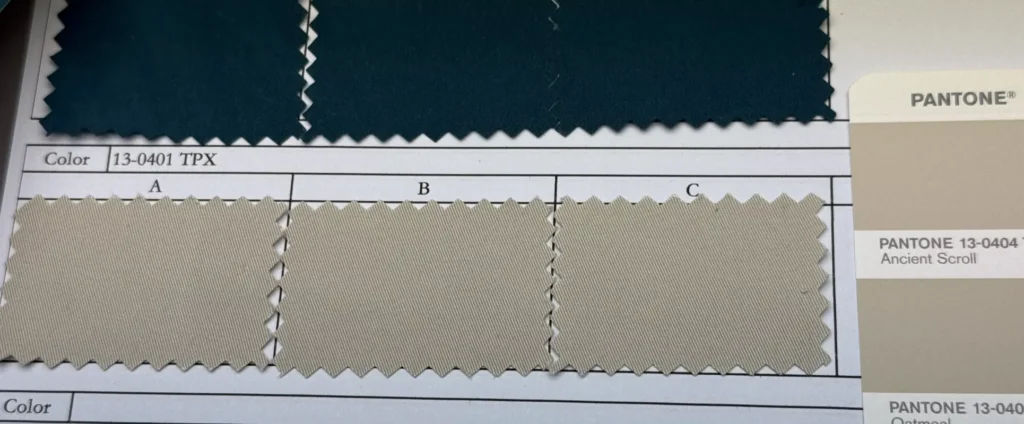
Common Production Problems When Developing Cotton Jacket Fabric
Choosing the right fabric structure is only the first step. Many winter jacket problems happen because fabric selection, finishing, and garment production requirements are not considered together.
For sourcing managers, understanding these risks before bulk production can reduce costly modifications and customer complaints.
Problem 1: The Fabric Becomes Too Stiff After Coating
One of the most common issues with coated winter jacket fabrics is excessive stiffness.
During development, a fabric may achieve good water resistance, but after increasing the coating amount, the hand feel can become uncomfortable.
Common causes include:
- Excessive PU coating thickness
- Incorrect coating formulation
- Poor balance between waterproof performance and softness
The solution is not simply reducing the coating.
Fabric suppliers need to adjust:
- Coating weight
- Fabric construction
- Finishing process
The final goal is to maintain both functional performance and wearing comfort.
Problem 2: The Jacket Does Not Provide Enough Wind Protection
Some brands focus heavily on the filling material but overlook the shell fabric.
A jacket with high-quality insulation can still feel cold if the outer fabric allows wind penetration.
For winter outerwear, fabric density, yarn structure, and finishing treatment all influence wind resistance.
A properly developed cotton jacket fabric should provide a balance between:
- Protection from cold wind
- Breathability
- Comfortable hand feel
Problem 3: Bulk Production Does Not Match the Approved Sample
This is a common concern for international brands.
A sample may pass internal approval, but bulk production can show differences in:
- Fabric softness
- Color appearance
- Coating effect
- Surface texture
The reason is often not the fabric design itself, but process control.
Before bulk production, professional suppliers should confirm:
- Raw material consistency
- Finishing parameters
- Physical testing results
- Production standards
Stable quality control is especially important for seasonal products because winter jackets usually have strict delivery schedules.
How to Choose the Right Cotton Jacket Fabric for Different Applications
There is no single fabric suitable for every winter jacket.
The correct choice depends on the product positioning.
For Casual Winter Jackets
Brands usually prioritize:
- Comfortable hand feel
- Attractive appearance
- Easy care performance
A polyester nylon cotton blend with peach finishing can provide a softer touch and premium surface appearance.
For Work Jackets
Workwear requires stronger durability.
Important factors include:
- Abrasion resistance
- Fabric strength
- Washing durability
The nylon component in polyester nylon cotton fabric can help improve long-term performance.
For Outdoor Winter Jackets
Outdoor applications usually require additional protection.
Common solutions include:
- PU coating
- Water-repellent finishing
- Higher fabric density
- Functional lining systems
The shell fabric needs to work together with insulation and garment construction.
What Should Brands Consider Before Ordering Winter Jacket Fabric?
For sourcing managers, fabric selection should happen before garment production begins.
Important evaluation points include:
1. Fabric Composition
Fiber composition affects:
- Appearance
- Durability
- Cost
- Finishing options
For example, polyester-nylon-cotton blends provide a different product feeling compared with standard polyester fabrics.
2. Fabric Weight (GSM)
Fabric weight affects:
- Garment weight
- Hand feel
- Production cost
A fabric around 180 GSM is often suitable for padded jackets because it provides a balanced structure without making the garment unnecessarily heavy.
3. Finishing Requirements
Brands should define the expected performance before selecting finishing.
Questions to consider:
- Does the jacket need water resistance?
- Is a soft hand feel important?
- Is the product positioned as outdoor or lifestyle wear?
Different answers require different finishing solutions.
4. Supplier Development Capability
A fabric supplier should not only provide fabric rolls.
For winter jacket development, technical support is important.
A capable supplier should help evaluate:
- Fabric construction
- Finishing selection
- Sample testing
- Bulk production stability
Frequently Asked Questions About Cotton Jacket Fabric
What fabric is best for padded jackets?
The best fabric depends on the jacket’s target market and performance requirements.
For many padded jackets, polyester nylon cotton fabric is a practical option because it combines durability, comfortable hand feel, and good finishing compatibility.
Is polyester nylon cotton fabric waterproof?
The fabric itself is not fully waterproof. However, water resistance can be improved through finishing processes such as PU coating or water-repellent treatments.
For higher waterproof requirements, additional membrane or lamination technologies may be considered.
Why does my winter jacket fabric become stiff after coating?
A stiff hand feel usually happens when the coating process is not balanced with the fabric structure.
The solution is to optimize coating weight and finishing methods rather than simply increasing coating thickness.
Why do brands choose cotton blend fabrics instead of polyester?
Many brands choose cotton blend fabrics because they provide a more natural appearance and better hand feel while maintaining the durability and stability required for outerwear production.
CC Textile: Developing Reliable Cotton Jacket Fabric Solutions
At CC Textile, we help brands develop fabrics for padded jackets, winter outerwear, work jackets, and outdoor apparel.
Instead of selecting materials only based on specifications, we evaluate the complete application:
- Target market
- Garment construction
- Required hand feel
- Finishing performance
- Production stability
Our fabric development experience includes:
- Polyester nylon cotton woven fabrics
- PU coated fabrics
- Peach finished fabrics
- Functional outdoor shell fabrics
- Custom fabric development for apparel brands
For brands looking for a reliable cotton jacket fabric supplier, selecting the right fabric construction and finishing process at the beginning can help avoid problems during bulk production.
Explore our custom fabric solutions or learn more about our garment production workflow for winter outerwear development.
You can also follow CC Textile’s textile development updates and fabric insights through our professional communities on LinkedIn and Facebook.
Final Thoughts on Selecting Cotton Jacket Fabric
A successful winter jacket is not created by insulation alone.
The outer shell fabric determines many important characteristics, including:
- Wind protection
- Comfort
- Appearance
- Durability
- Production stability
For brands developing winter outerwear, selecting the right cotton jacket fabric early in the process helps create products that perform consistently from the first sample to final production.
The right fabric choice is where successful winter jacket development begins.
CottonJacketFabric #WinterOuterwear #FunctionalFabrics #TextileSourcing #GarmentManufacturing