Choosing the right outdoor jacket fabric is a critical decision for brands developing functional outerwear. A successful jacket project requires more than selecting a fabric with a good appearance. The material must provide reliable waterproof protection, wind resistance, durability, and comfortable wearing performance after manufacturing.
For sourcing managers, the challenge is finding a balance between performance, cost, and production stability.
A fabric that performs well during sampling may still create problems during bulk production, such as:
- Waterproof performance variation
- Poor coating adhesion
- Unstable hand feel
- Lamination failure after washing
Therefore, professional buyers evaluate the complete fabric structure, including the base fabric, finishing technology, and testing performance before placing bulk orders.
Among many shell materials, 228T nylon Taslan fabric has become a commonly selected option for outdoor jackets because it provides a practical balance between durability, weight, and finishing flexibility.
Why 228T Nylon Taslan Is a Popular Outdoor Jacket Fabric
When brands develop outdoor jackets, the shell fabric needs to handle demanding environments.
The material may face:
- Rain exposure
- Strong wind
- Backpack friction
- Outdoor movement
- Repeated washing
A suitable outdoor jacket fabric needs enough strength without becoming unnecessarily heavy.
1. Durable Fabric Construction
228T nylon Taslan is known for its stable woven structure.
Compared with lightweight fashion fabrics, it provides:
- Better abrasion resistance
- Stronger fabric body
- Improved garment shape retention
These characteristics make it suitable for:
- Hiking jackets
- Outdoor lifestyle jackets
- Windbreakers
- Functional outerwear
2. Balanced Weight and Hand Feel
One common mistake during fabric sourcing is focusing only on lightweight performance.
A thinner fabric does not always create a better jacket.
If the fabric is too light:
- Durability may decrease
- The garment may lose structure
- The wearing experience may feel less premium
228T nylon Taslan provides a balanced solution:
- Moderate fabric weight
- Comfortable wearing feeling
- Good surface appearance
- Suitable support for waterproof finishing
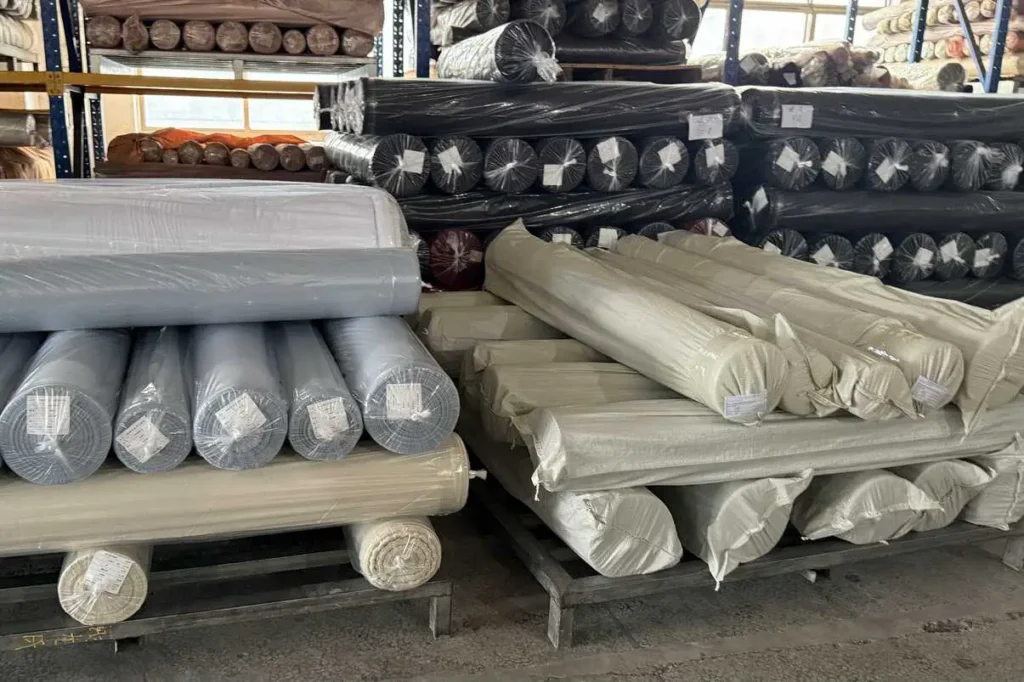
What Makes a Good Outdoor Jacket Fabric?
A professional outdoor jacket fabric should meet several performance requirements.
Waterproof Performance
Outdoor jackets must prevent rain penetration while maintaining comfort.
Waterproof performance is usually achieved through:
- PU or PA coating
- TPU membrane lamination
- Multi-layer composite structures
The correct waterproof level depends on the product application.
A lightweight city jacket and a professional mountain shell do not require the same performance specification.
Windproof Protection
Wind resistance is another important requirement.
A dense woven structure combined with coating or membrane technology reduces air penetration and improves protection in cold environments.
Comfortable Fabric Hand Feel
A common challenge is balancing waterproof performance with comfort.
Higher waterproof protection may sometimes create:
- Stiffer fabric feeling
- Reduced flexibility
- More fabric noise during movement
The right finishing solution depends on the final product positioning.
Waterproof Technologies for Outdoor Jacket Fabric
Different waterproof technologies provide different performance levels.
The three common solutions are:
- PU/PA coating
- TPU lamination
- Three-layer composite construction
1. PU and PA Coated Outdoor Jacket Fabric
Coating is one of the most widely used waterproof solutions.
The process applies a functional coating layer onto the fabric surface or back side. This layer helps reduce water penetration by filling the small spaces between yarns.
PU Coating
Polyurethane coating is widely used because it provides:
- Flexible hand feel
- Good waterproof performance
- Cost-effective production
Typical waterproof performance:
1,000–3,000 mm hydrostatic pressure
Suitable applications:
- Casual outdoor jackets
- Windbreakers
- Everyday rainwear
PA Coating
Polyamide coating provides:
- Good adhesion
- Smooth surface effect
- Stable finishing performance
The final performance depends on:
- Coating thickness
- Chemical formulation
- Fabric construction
2. TPU Laminated Outdoor Jacket Fabric
For higher-performance outdoor products, TPU membrane lamination is commonly used.
A TPU film is bonded to the fabric through a controlled lamination process.
Advantages include:
- Higher waterproof protection
- Better wind resistance
- Improved moisture management options
Typical performance range:
5,000–10,000 mm waterproof rating
Breathability may reach:
Around 5,000 g/m²/24h MVTR
depending on membrane type and construction.
TPU membranes are available in different options:
- Low breathable TPU
- High breathable TPU
- White TPU
- Black TPU
- Colored TPU
This allows brands to adjust performance and appearance according to product requirements.
3. Three-Layer Composite Outdoor Jacket Fabric
Premium outdoor jackets often use a three-layer structure:
Outer fabric + TPU membrane + Tricot knitted backing
Each layer performs a specific function.
Outer Fabric
Usually 228T nylon Taslan or similar shell materials.
Provides:
- Durability
- Appearance
- Abrasion resistance
TPU Membrane
Provides:
- Waterproof protection
- Wind resistance
- Moisture management
Tricot Backing
Provides:
- Membrane protection
- Better wearing comfort
- Improved fabric stability
Typical waterproof performance:
10,000 mm+
This structure is commonly used for:
- Technical outdoor jackets
- Premium shell jackets
- Heavy-duty outdoor products
Waterproof Technology Comparison for Outdoor Jacket Fabric
| Technology | Structure | Waterproof Rating | Breathability | Suitable Applications | Cost Level |
|---|---|---|---|---|---|
| PU/PA Coating | Shell + coating | 1,000–3,000 mm | Low–Moderate | Windbreakers, casual outdoor jackets | $ |
| TPU Lamination | Shell + TPU membrane | 5,000–10,000 mm | Moderate–High | Hiking jackets, active outdoor wear | $$ |
| 3-Layer Composite | Shell + TPU + Tricot | 10,000 mm+ | High | Premium outdoor shell jackets | $$$ |
Actual performance depends on fabric construction, finishing method, membrane type, and testing conditions.
Outdoor Jacket Fabric Testing Standards Before Bulk Production
Before mass production, professional buyers should evaluate fabric performance through laboratory testing.
Common testing standards include:
Waterproof Testing
- ISO 811
- AATCC 127
These tests measure hydrostatic pressure resistance.
Breathability Testing
Common evaluation:
- JIS L1099
This measures moisture vapor transmission performance.
Additional Production Checks
Brands should also consider:
- Coating adhesion
- Lamination peel strength
- Washing durability
- Color consistency
Testing before bulk production helps reduce quality risks after garment delivery.
Common Sourcing Problems When Selecting Outdoor Jacket Fabric
Problem 1: Sample Quality Does Not Match Bulk Production
Many brands experience differences between sample approval and bulk production.
Possible reasons:
- Different production batches
- Coating thickness variation
- Lamination condition changes
A reliable supplier should control material consistency throughout development.
Problem 2: Waterproof Performance Decreases After Washing
A jacket should maintain performance during customer use.
Important checks include:
- Waterproof testing before production
- Washing simulation
- Adhesion testing
Problem 3: Fabric Becomes Too Hard After Finishing
Waterproof treatment can affect fabric comfort.
Incorrect finishing selection may result in:
- Hard hand feel
- Reduced flexibility
- Uncomfortable wearing experience
The solution is not simply adding more coating or thicker membranes.
The goal is finding the right balance.
How to Select Outdoor Jacket Fabric Based on Product Positioning
Different products require different fabric solutions.
| Product Type | Recommended Fabric Solution |
|---|---|
| Urban outdoor jacket | 228T nylon Taslan + PU coating |
| Lightweight hiking jacket | Nylon shell + TPU membrane |
| Premium technical shell | 3-layer TPU + Tricot construction |
A sourcing manager should consider:
- Target market
- Retail price
- Weather conditions
- Expected product lifetime
How CC Textile Supports Outdoor Jacket Fabric Development
Selecting the right fabric is only the first step.
CC Textile helps brands evaluate:
- Fabric construction
- Waterproof finishing options
- TPU lamination solutions
- Production requirements
Through customized fabric solutions, brands can select suitable materials based on performance targets and cost expectations.
For companies requiring complete apparel development support, CC Textile also provides garment manufacturing coordination through a professional garment production workflow.
With experience in functional textiles and apparel development, CC Textile works with customers from fabric selection to final production requirements. Follow CC Textile’s latest fabric developments and industry updates through our professional communities on LinkedIn and Facebook. More information about the company and capabilities can be found through About Us.
Frequently Asked Questions About Outdoor Jacket Fabric
What is the best fabric for outdoor jackets?
There is no single fabric suitable for every outdoor jacket.
The best choice depends on:
- Waterproof requirement
- Product positioning
- Target cost
- Expected durability
228T nylon Taslan is widely used because it provides a good balance between durability, comfort, and finishing flexibility.
Is TPU better than PU coating for outdoor jackets?
Not always.
PU coating is suitable for products requiring:
- Cost control
- Basic waterproof protection
TPU lamination is more suitable for:
- Higher performance jackets
- Better moisture management
- Premium outdoor products
Why do brands choose 228T nylon Taslan fabric?
Because it offers:
- Durable construction
- Suitable thickness
- Good compatibility with waterproof finishing technologies
It is a practical choice for many outdoor jacket applications.
Final Considerations Before Ordering Outdoor Jacket Fabric
A successful outdoor jacket project requires more than selecting a waterproof material.
Brands should evaluate:
- Fabric construction
- Waterproof technology
- Testing results
- Production stability
- Final garment performance
The right outdoor jacket fabric helps brands reduce production risks while creating reliable products for outdoor customers.
For sourcing teams, the most suitable fabric is not always the thickest or most expensive option. It is the material that achieves the right balance between performance, comfort, and manufacturing reliability.
#OutdoorJackets #WaterproofFabric #TextileSourcing #FunctionalFabrics #GarmentManufacturing