To request a quote for waterproof jacket fabric, share the garment use, construction, hydrostatic head and breathability test method. Include the care and seam-tape requirements, estimated quantity and number of colors if you know them.
“Waterproof and breathable” describes what you want from a jacket, but it leaves several fabric choices open. A useful request for quotation covers the face fabric, any coating or membrane, seam construction and the tests the finished fabric needs to meet.
You do not need every answer before contacting a supplier. Sharing the garment use, a reference sample and the requirements you already know gives the first conversation a practical starting point.
Compare woven jacket shell fabrics and use the checklist below to request samples or a quote. Include a reference swatch or product code if you have one.
Separate the garment claim from the fabric claim
The intended garment helps make the protection requirements clearer:
- Is the jacket expected to shed light rain on the face fabric only, or to resist water penetration under a stated hydrostatic method?
- Does the program need a membrane, coating or laminated barrier, or only surface water repellency (DWR)?
- Are seams taped / sealed in garment construction, or is the fabric expected to carry waterproof performance alone?
- Is breathability defined by an MVTR or RET test, or mainly by how the garment should feel in use? A comparison sample can help if the test target is still open.
These answers form the basis of the fabric request. The choice between C0 DWR and conventional DWR belongs in the chemical requirements; it does not establish resistance to water penetration. Our PFAS-related development information explains how to define the substance and testing scope for the project.
Field template: what to put in the waterproof jacket fabric RFQ
Copy and complete as many lines as you already know:
- Company and destination market — brand / factory name; ship-to region (EU / US / AU / other).
- Garment — hiking shell, travel jacket, padded jacket face, workwear rain jacket, softshell-adjacent face, etc.
- Protection intent — surface water repellency only; resistance to water penetration; wind barrier; waterproof barrier with coating/membrane (state which).
- Method targets — name the hydrostatic / spray / rain method you use internally and any after-wash expectation.
- Breathability — method and target if required; otherwise mark “not in scope”.
- Construction targets — composition, GSM, width, hand feel reference, stretch or non-stretch.
- Chemistry — C0 / non-fluorinated DWR preferred? Fluorinated DWR excluded? Any PFAS declaration or test scope?
- Color / appearance — solid, yarn-dyed, print, two-tone; approved lab dip if any.
- Reference — product code(s) from the catalog, or a physical / couriered sample.
- Quantity band and timing — sampling first vs bulk discussion window.
You can send these details through our fabric inquiry form. Minimum order quantity, price and lead time are confirmed for the selected specification. Any required certificates or test reports also need to be checked for that fabric.
Fabric references to compare
These references offer starting points for comparing construction and handle. They are not automatically waterproof jacket fabrics; the recorded finish and any proposed barrier construction still need to be checked:
- Polyester/nylon 2/2 twill CC-PC-112
- 272T semi-dull nylon twill CC-2294
- 380T two-tone nylon with W/R CC-2190
If none match, use custom fabric development and the China woven mill briefing guide.
Details that help avoid another sampling round
- Asking for “waterproof breathable” without a method or barrier type.
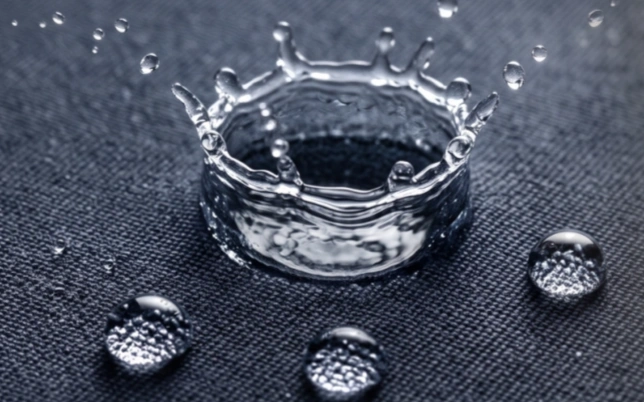
- Treating DWR as waterproof.
- Assuming every performance fabric is C0 DWR.
- Omitting wash / care expectations for beading durability.
- Sending a photo without composition, weight or a physical reference when color/handle matter.
- Assuming a certificate, test result or minimum order quantity applies to a fabric before checking the specific reference.
How to use this checklist in one working session
- Shortlist 2–3 SKUs on performance fabrics or prepare a reference sample.
- Fill the ten fields above in a short note.
- Share the known requirements through our contact form. Any points still to be decided can be discussed together.
- Keep chemistry questions aligned with C0 DWR guidance and PFAS controls when compliance teams are involved.
The checklist helps us discuss the same garment and fabric requirements from the start. Your brand’s restricted-substance list and the agreed laboratory methods remain the references for chemical and performance testing.
Frequently asked questions
What should a waterproof jacket fabric RFQ include?
Include company and destination market, garment type, whether you need surface water repellency or a waterproof barrier, test methods and targets, construction targets, chemistry preferences, color, product codes or a reference sample, and quantity/timing. Send via the contact RFQ form.
Is DWR the same as waterproof fabric?
No. DWR is surface water repellency. Waterproof barrier behaviour usually needs coating, membrane or other construction decisions plus seam strategy. State both requirements separately in the RFQ.
Which CC Textile pages should I open before sending the RFQ?
Start with performance fabrics for published shell candidates, read the C0 DWR vs conventional DWR insight when chemistry is open, and use fabric development if you are matching a sample rather than a catalog code.
How are minimum order quantities and test documents confirmed?
Minimum order quantity, price and lead time are confirmed for the selected fabric. We also review which certificates or test reports are needed and available for that specification. This checklist helps prepare the inquiry; it does not establish certification.
Can US, EU and AU buyers submit the RFQ in English?
Yes. English RFQs are accepted for buyers in Europe, the United States and Australia. A4 swatches are free; shipping is collect / paid by the customer.