
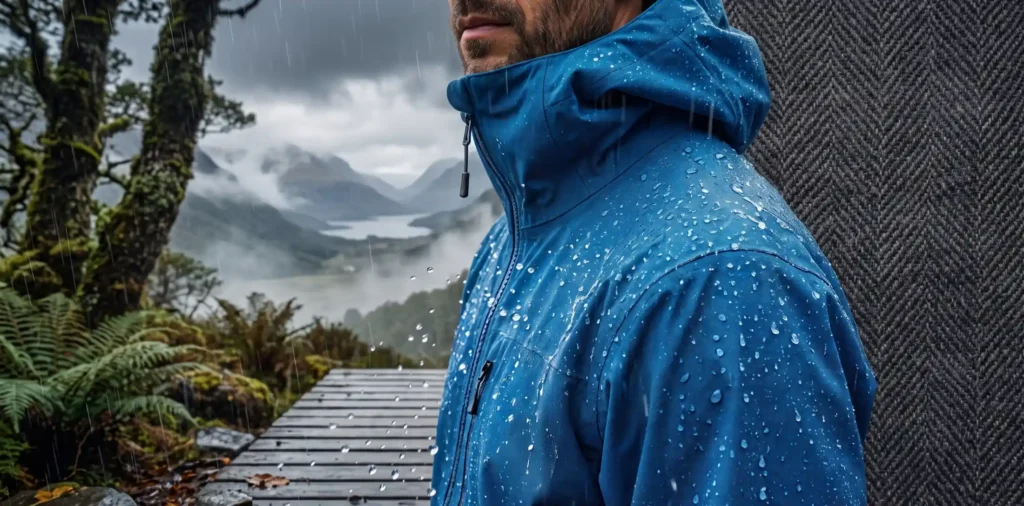
When an outdoor jacket doesn’t keep the wearer warm, the first reaction is usually the same.
The insulation must be too thin.
The fit probably isn’t right.
Maybe the pattern needs to be redesigned.
These are reasonable assumptions—but they aren’t always correct.
Over the years, we’ve seen many jackets with excellent insulation and well-designed construction still perform poorly in cold weather. The reason often isn’t the garment itself. It’s the outer fabric.
A jacket is a system. Insulation, lining, and outer fabric work together. If one part doesn’t perform as expected, the whole system is affected.
For brands developing outdoor apparel, understanding the role of the outer fabric can prevent costly product revisions and reduce customer complaints after launch.
Warmth Depends on the Entire Fabric System
One situation surprises many product developers.
Two jackets use the same insulation.
The same fill weight.
The same sewing construction.
Yet one jacket feels noticeably warmer outdoors.
The difference is often the fabric.
If cold wind penetrates the shell, body heat escapes more quickly.
If moisture cannot escape from inside the garment, insulation gradually loses efficiency.
If the outer fabric becomes stiff in low temperatures, overall comfort is reduced.
Warmth isn’t determined by insulation alone. It depends on how well every layer works together.
Wind Resistance Helps Preserve Body Heat
Wind Protection Is Often More Important Than Extra Insulation
Cold air removes heat much faster than still air.
Even high-quality insulation struggles to perform if wind continuously passes through the outer fabric.
This is why two jackets with identical insulation can perform very differently on a windy mountain trail.
Selecting a fabric with appropriate wind resistance helps maintain the layer of warm air surrounding the body, allowing the insulation to work as intended.
For many outdoor applications, improving wind resistance delivers a greater improvement in thermal comfort than simply adding more insulation.
Breathability Prevents the “Cold After Sweating” Effect
Many people believe that reducing breathability makes a jacket warmer.
In reality, poor breathability often creates the opposite result.
During hiking, skiing, or climbing, the body naturally produces heat and moisture.
If water vapour cannot escape, condensation begins to build inside the garment.
Once activity slows, that trapped moisture cools rapidly, making the wearer feel cold—even though the insulation itself hasn’t changed.
This is one of the most common reasons customers say a jacket “doesn’t feel warm enough.”
In many cases, the issue isn’t insufficient insulation.
It’s moisture trapped inside the garment.
Moisture Management Is Just as Important as Waterproofing
Keeping rain out is only part of the equation.
Managing internal moisture is equally important.
A waterproof jacket that cannot efficiently move perspiration away from the body may eventually feel damp from the inside.
Once insulation absorbs moisture, its ability to retain heat decreases significantly.
For outdoor garments designed for active use, effective moisture management helps maintain a more stable body temperature throughout changing activity levels.
Low Temperatures Can Change Fabric Performance
Not all fabrics behave the same in winter conditions.
Some coated fabrics become noticeably stiffer as temperatures drop.
Although this may not affect laboratory test results, it can influence real-world comfort.
A stiff outer fabric can restrict movement, create pressure points, and reduce overall wearing performance during climbing, skiing, or trekking.
For technical outdoor apparel, maintaining flexibility in low temperatures is an important part of fabric selection.
Choosing the Right Fabric for Cold-Weather Performance
There isn’t a single fabric that works for every outdoor application.
The best solution depends on the intended activity, climate, and performance requirements.
Several fabric technologies are commonly used to improve comfort in cold environments.
Softshell Fabrics
Softshell fabrics combine wind resistance, stretch, and breathability in a single construction.
Compared with traditional hard-shell fabrics, they provide greater comfort during high-activity sports where body temperature changes frequently.
Because softshell fabrics reduce wind penetration while allowing moisture vapour to escape, they help maintain a more balanced microclimate inside the garment.
This makes them well suited for hiking, climbing, cycling, and trekking apparel.
TPU Lamination
For garments that require both waterproof protection and breathability, TPU lamination offers an effective solution.
A properly engineered TPU membrane prevents rain from penetrating while allowing water vapour to escape.
Rather than focusing only on achieving a high waterproof rating, successful outdoor fabrics balance waterproof performance with breathability and comfort.
This is especially important for ski wear, mountaineering jackets, and technical rainwear.
Mechanical Stretch
Unlike fabrics that rely on elastane (spandex), mechanical stretch fabrics achieve flexibility through yarn selection and fabric construction.
Because they contain little or no elastane, they offer several long-term advantages.
These include:
- Better shape retention
- Improved resistance to ageing and fabric fatigue
- More consistent performance after repeated washing
- Reduced risk of permanent bagging
- Easier recycling for certain product categories
For outdoor garments expected to perform over multiple seasons, mechanical stretch provides a practical balance between comfort, durability, and long-term stability.
Moisture Management
Effective moisture management helps transport perspiration away from the body before it affects thermal comfort.
When combined with breathable fabric construction, it allows garments to remain drier during activity and recover more quickly during rest periods.
For users moving between high and low activity levels, this contributes significantly to overall comfort in cold environments.
Fabric Development Starts Long Before the First Sample
One of the most common mistakes in product development is treating fabric selection as the final step.
In reality, it should be one of the first.
Choosing the right fabric early in the development process helps determine how the finished garment will perform months later in real outdoor conditions.
Instead of solving problems after wear testing, brands can often avoid them by selecting the appropriate fabric system from the beginning.
How CC Textile Supports Outdoor Fabric Development
At CC Textile, we work with brands developing outdoor apparel, sportswear, and technical garments.
Rather than recommending the same fabric for every project, we help customers select materials based on the intended application, climate, and performance requirements.
Our development capabilities include:
- Softshell fabrics
- TPU laminated fabrics
- Mechanical stretch woven fabrics
- Waterproof and breathable fabrics
- Moisture management finishes
- C0 PFAS-free DWR technologies
- Custom functional fabric development
Learn more about our garment development services:
To learn more about our experience, visit:
We also regularly share textile knowledge and product development insights on LinkedIn:
https://www.linkedin.com/in/cc-textile
Conclusion
A warm outdoor jacket is never the result of a single component.
Insulation, garment construction, and fabric all work together as one system.
Understanding how wind resistance, breathability, moisture management, and fabric flexibility influence thermal comfort helps brands make better product decisions before production begins.
In the end, improving outdoor performance often starts long before the first jacket is sewn.
It starts with choosing the right fabric.

Great article! It clearly explains why outdoor jackets can fail in cold weather and highlights the importance of fabric, insulation, and garment construction. Very informative and easy to understand. Thanks for sharing!